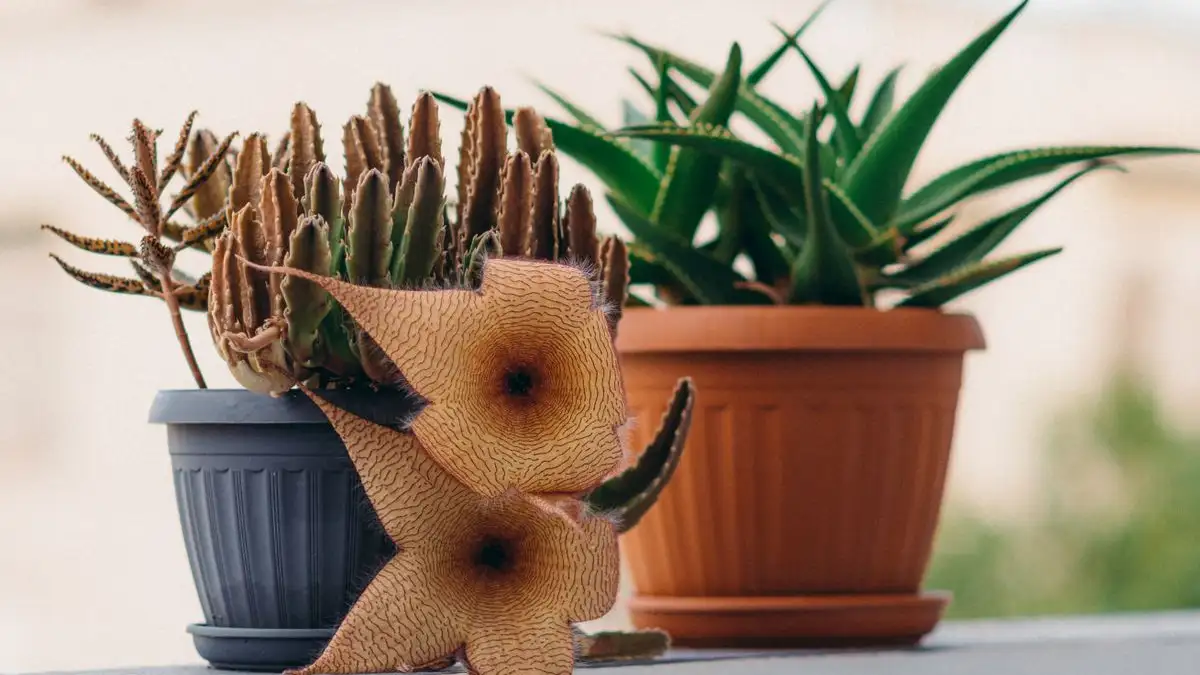
Your Christmas cactus isn't thirsty in November because it has largely stopped drinking. Short days and cool nights have ended new growth, transpiration has slowed to a trickle, and the mix that dried out in four days in July now stays damp for nine. The plant isn't refusing the water you give it, it simply isn't using it. Water by how long the pot takes to dry right now, not by the calendar, and learn to tell rest apart from thirst, because those two look nothing alike up close. Nearly every case of winter rot I have caused traced back to pouring on a schedule the plant had already walked away from.
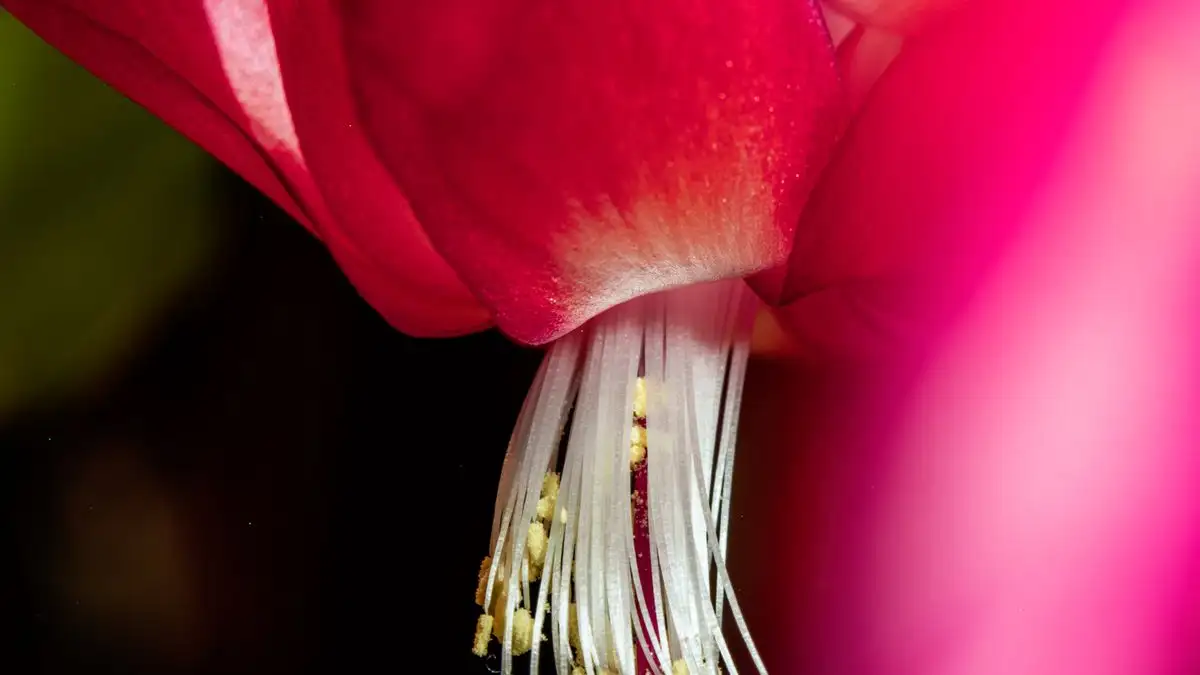
The pot in my left hand, not the date on the wall
I check moisture the same way every time, and it starts with lifting the pot. Left hand flat under the base, tip it a few degrees, then set it down and listen to what it does.
Bone-dry bark sounds like gravel shifting and feels almost hollow. Half-wet bark feels settled and heavy at the bottom, with a small dead thud when it lands. If the base of the pot is the heavy part, the roots at the base are sitting in water, and in November, in a cool room, that is exactly where things go wrong. Roots need air as much as they need water, and the bottom third of a pot is the last place to get it back.
When my hand isn't sure, I push a plain bamboo skewer down the inside wall, past the bark, and leave it for a slow count of ten. If it comes out cool and dark at the tip, the bottom of the root ball is still wet. If it comes out dry, with a little grit clinging to it, the whole column has dried and the plant has been sitting dry for a while already.
The number that matters is not how many days I waited. It is how many days the pot took to get back to the weight it had the last time I watered, and then how many extra days I let it sit there. In summer, the first number is small and the second is almost zero: dry in three days, water on the fourth. In November, the first number stretches to seven or eight, and the second one should stretch with it. That stretch is the rest period in a sentence.
The signs a plant is actually resting
Rest is quiet and even. It does not look like anything, which is why it gets missed. I look in three specific places.
On an orchid in a clear pot, I look at the root tips against the wall. A growing root has a bright, wet-looking green tip. When the plant goes into rest, those tips dull down and stop advancing. That single observation tells me more than any leaf color does.
On a holiday cactus, I look at the last segment on each stem. When it is growing, the newest segment is swelling and extending. In rest, it just holds where it is, plump and slightly shiny, with no new segment pushing out of the tip.
On an African violet, I look at the crown. Growth means a new leaf unfurling out of the center every week or so. In low December light, that center goes quiet for a month, and the older leaves flatten out and stop expanding.
Then there is the tell that overrides everything else: the dry-down time roughly doubles. A pot that took three days in September taking seven or eight in December means the plant has slowed whether or not it is showing it.
The other half of the skill is knowing what decline looks like, because it is patchy while rest is uniform. Yellowing from the base up, dark translucent patches, leaves that come off with a light tug, a soft black line at the soil line, roots that smell sour: that is rot, not rest. A resting plant smells like nothing at all and looks the same on Tuesday as it did on Monday.
Three plants, three separate deals with winter
Orchids: usually temperature, not drought
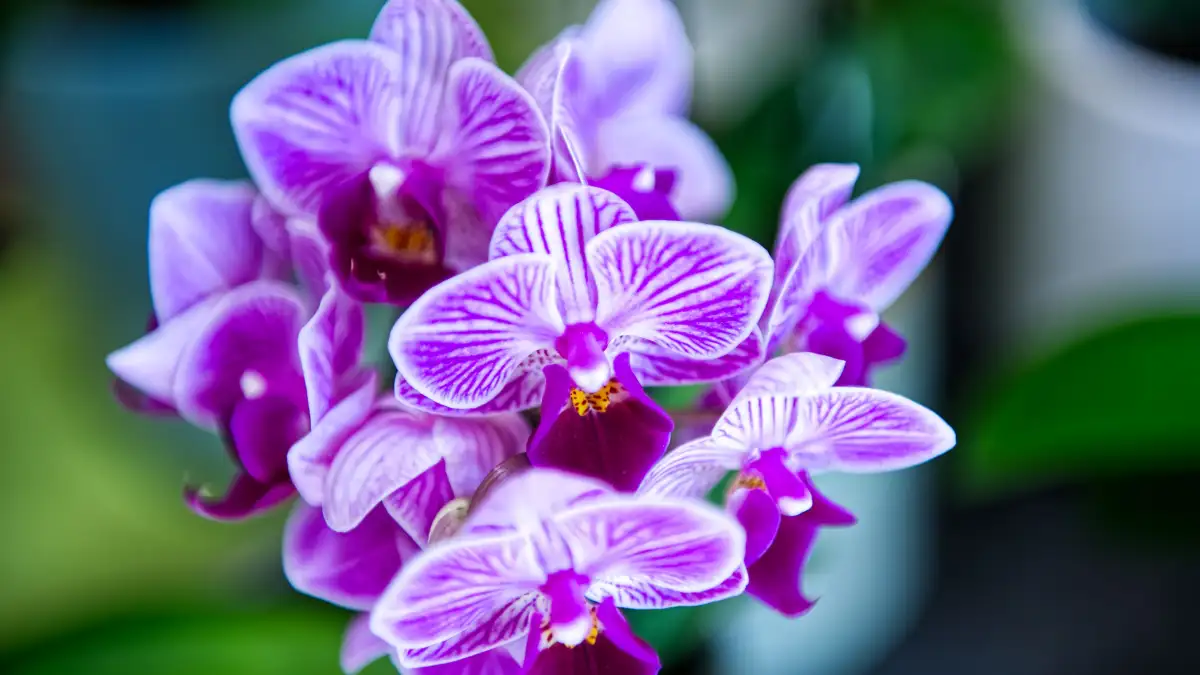
Most phalaenopsis do not need to be dried out to spike. They respond to a drop in night temperature, into the low 60s for two or three weeks, while still being watered normally. What I do in that window is stretch the interval between waterings and read the leaves. A phalaenopsis leaf that stays firm when I fold it slightly is fine. A leaf that feels like a piece of leather, floppy and thin, means I stretched too far and the plant is losing a leaf it will not replace quickly.
With pseudobulb orchids, I read the bulb. A little shriveling along the sheath on the newest growth is acceptable during a cool dry rest. Accordion pleats running up the side of the bulb, where the tissue collapses into folds, means the plant has crossed from rest into real dehydration, and I water it that day without waiting for the interval.
Nobile-type dendrobiums are the genuine exception in my collection. They want a real dry, cool rest to flower, and I honor that. Even they are not taken to zero. If the canes start to look ribbed and slightly dull, they get a light pass of water and then go back to waiting.
Holiday cacti: sparing, but never shriveled
The short-day treatment that sets flower buds is exactly when people starve the plant, and it is the reason buds drop before they open. A Christmas cactus in bud that has been bone dry for three weeks will abort those buds without ever showing rot.
I water sparingly through the short-day window and check the segments every few days by pinching the last one between thumb and forefinger. Plump and firm with tight joints means it is fine and I keep waiting. Lengthwise creases running down the segment means I have gone past sparing into dehydration, and it gets water.
The confusion is that rot looks similar at a glance. Soft, mushy segments that have lost their shine, joints that separate with almost no pressure, and a base that gives when you press it: that is too wet, not too dry. Creases mean give it water. Mush means take it out of the pot and look at the roots.
African violets: slower, not dormant
African violets have no true dormancy. Low winter light just slows them down, which is a different problem with a different answer. Because the plant is still functioning, I reduce how often I water but not how much goes in when I do. When it is time, the whole root ball gets soaked until water runs through, and then it dries for longer than it would in June.
Reducing the volume instead is what kills violets in January. Those fine hair roots near the surface dry out fast and do not come back quickly, and a root ball that has been half-watered for a month collapses at the base. Thirst in a violet looks like leaves drooping down the sides of the pot and petioles going limp. A plant that is just slow looks the same as it did in October, only nothing new is happening.
If the plant sits in a self-watering reservoir, the wick keeps pulling whether the plant is drinking or not. I let the reservoir run dry for a couple of days between refills from November through February, which does more good than anything else I do to it. I also fill my watering can the night before so nothing cold goes into a pot sitting in a 62-degree window.
Where the rot actually comes from
Not from the amount of water I pour. From how many days the roots spend wet in a cool mix with no light-driven pull moving that water out through the leaves.
In July, a drench is followed by fast transpiration and the mix is back to holding air within a day or two. The same drench in November can take a week or more to work off, and the bottom of the pot never really breathes. Same pour, same plant, completely different outcome, because the clock changed and I didn't.
The practical tradeoff is worth saying out loud: it is far safer to keep a resting plant a little drier than ideal for two weeks than to keep it evenly moist for one. Brief drought is something these plants are built to survive. A week of cold, saturated mix is not.
Waking them back up
I resume when the plant tells me, not on a date. New root tips bright green against the pot wall. A new leaf unfurling in the center of the violet. Small pink or red nubs swelling at the tips of the cactus segments and holding instead of drying up.
Even then, I come back in two steps. First I shorten the interval between waterings and keep the volume the same. Once the plant is drinking that readily, a week or two later, I go back to full soakings. The one thing I never do is the makeup drench, a big flood to apologize for six weeks of restraint. A mix that has been dry that long can go hydrophobic and shed water down the sides, leaving the center of the root ball dry while the saucer fills, and on a violet it drives water straight into the crown.
There is one more thing that gets lost. Not every plant in the house is resting. A Christmas cactus under a grow light in a warm room may never rest at all and can still set buds on schedule. A violet in a cold north window and a violet on a shelf under lights in a heated room are not on the same clock, and neither one is on the calendar. The pot in my hand is the only schedule that has ever worked, and it changes room to room, month to month, without warning me first.