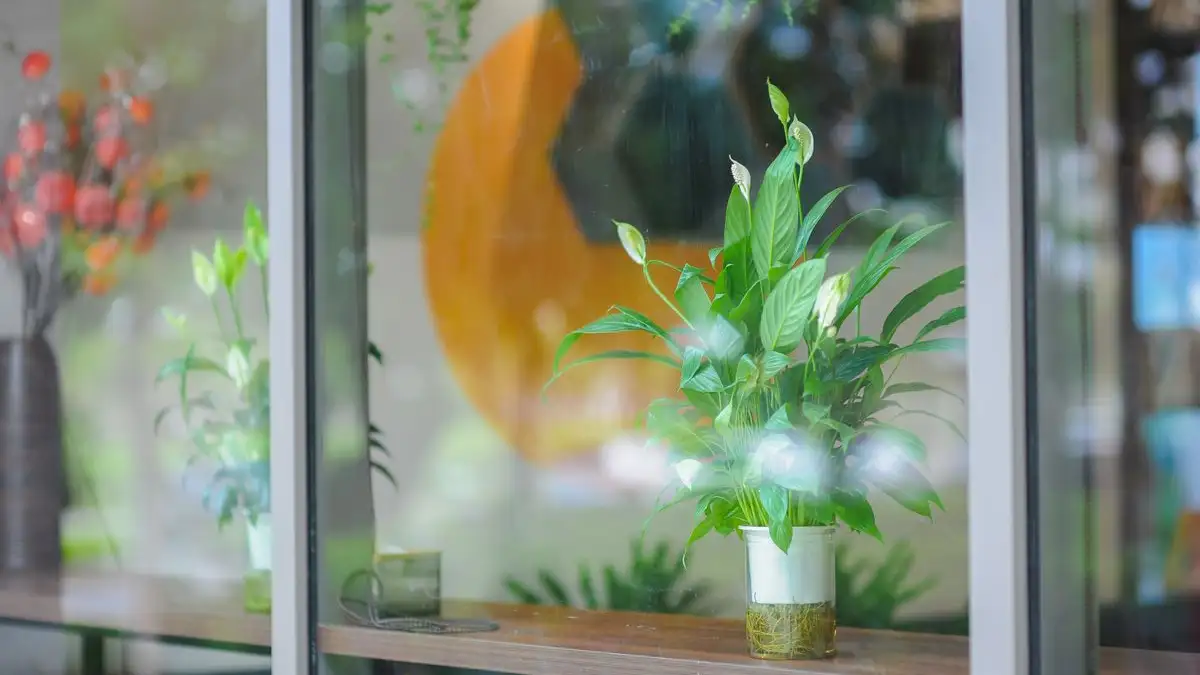
A drooping peace lily is a moisture problem, not a verdict, and the most common cause is a pot that has stayed wet too long. Before you pour anything, lift the pot and push a finger into the mix: if the top inch or two is still damp and the pot feels heavier than it looks, the plant is overwatered, the roots are suffocating rather than starving, and adding water is the fastest way to turn a recoverable plant into a dead one. If the mix is dry and the pot feels light, it genuinely is thirsty, and one thorough watering will bring it back within hours.
Start with the pot, not the leaves
I start with the pot because the pot doesn't perform. Both hands under the rim, lift it a couple of inches, set it back down. A peace lily in a six-inch pot that needs water feels like a paper cup; you'd be surprised how little it weighs. A peace lily that's been sitting wet feels like a bag of sand. Same plant, same pot, twice the apparent mass. You feel that difference in your wrists before you've decided anything.
Then the finger. Not the surface, where it always dries first, but down to the second knuckle, and do it twice: once an inch in from the rim and once closer to the crown of the plant, because those two spots don't dry at the same rate. If the mix is cool and damp all the way down at both places, stop. The plant has water. What it doesn't have is air in the root zone.
Then your nose, if you're still unsure. Crouch over the pot and smell the soil. Healthy mix smells like the ground after rain. Sour, musty, like a dish towel left in the sink overnight, that smell is rot, and it has already started.
The leaves tell you which way it went
Overwatered plants yellow from the bottom up. The lowest leaves go limp before they change color, so a leaf that's soft and slack and still green is your warning; by the time it turns yellow, the plant has been wet for a while. Stems go soft too. If you can pinch the base of the plant and it gives under your fingers, that's not dehydration, that's tissue breaking down.
Underwatered plants wilt with the whole plant involved, old leaves and new growth both. Edges go dry, crisp, and brown. The leaf tends to stay flat rather than folding, because there's no water pressure left to hold it in any shape. The pot is light. The mix may have shrunk away from the inner wall, leaving a visible gap.
There's one more signal on the overwatered side: look at the surface of the mix. A pale fuzzy film across the top, or a green sheen on the soil in a clear nursery pot, means that surface hasn't dried in weeks. That film isn't the problem. It's the receipt.
Confirm it at the roots
If two of those checks point to wet, go all the way. Lay your hand over the soil with the plant's stems between your fingers, turn the pot upside down, and tap the rim until the root ball slides free. Healthy roots are firm and white or tan and smell like almost nothing. Rotten roots are brown to black, and when you squeeze one between your fingers it collapses into a wet string. That difference is not subtle once you've felt both.
What you do next depends on which one you're holding.
For rot: cut the mushy roots back to firm tissue with clean shears, knock off most of the old mix, and repot into something chunky, bark and perlite with a little peat or coir, in a pot barely larger than what's left of the root ball. I use terracotta for peace lilies because it wicks moisture through the wall. Then don't water for a few days, and after that water only when the top two inches are dry. Expect the plant to look worse before it looks better. A peace lily that has lost roots can't take up water even from damp soil, so it keeps drooping. That droop is not an instruction to water.
For dry: water slowly until it runs out the drainage holes, empty the saucer, and give it a few hours. A thirsty peace lily usually lifts by evening.
When the same droop isn't about water at all
Not every symptom is a water verdict, and this is where the check-first habit saves you from fixing the wrong thing.
African violets yellow when they're overwatered, outer leaves going pale and limp while the soil stays wet. But they also yellow from cold water damage, and that damage sits exactly where the droplet landed: pale, limp patches on leaves whose soil is completely fine. Same color, different cause, and only the soil check separates them.
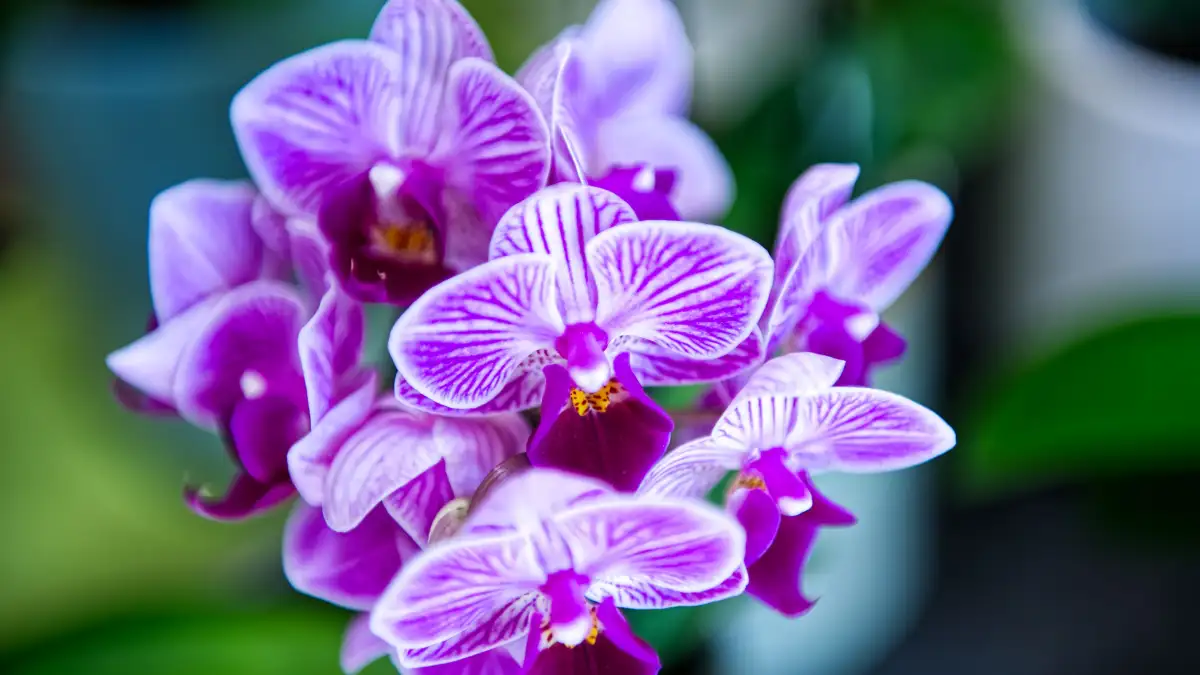
Orchid buds drop before they open for reasons that aren't about how much water you've been giving. Underwatering can do it. So can a sudden humidity drop, or simply moving the plant from a humid greenhouse to a dry living room. If the buds yellowed and fell within a few days of coming home, the change did it, and more water won't bring them back. It'll just set up the next problem.
And then there's the peace lily droop that happens at four in the afternoon. On a warm day, a peace lily can flag hard, leaves flat out, whole plant leaning, and then stand back up by nine at night in a pot that was heavy the whole time. That's transpiration outrunning what the roots can pull up in the heat, and it reverses on its own. Water every time you see that and you'll drown the plant inside a month. Check in the morning instead, before the sun is on it, when the plant has had all night to catch up.
The order I actually do it in
- Lift the pot and compare it to the last time you lifted it.
- Poke the mix in two spots, rim and crown, down to the second knuckle.
- Smell the soil surface.
- Read the leaves: which ones, top or bottom, crisp or slack.
- Only if it still points wet, slide the root ball out and look.
The reason to run the checks in that order is that the two mistakes cost different things. Watering a dry plant an hour late costs nothing. Watering a wet plant costs roots you can't grow back quickly, and you can't undo it, you can only wait it out and hope the crown holds. That's the part the standard advice skips. It tells you a peace lily droops when it's thirsty, which is half true, and half true is the dangerous kind. The pot in your hands has the other half.