Overwatering a Thanksgiving cactus does not look like overwatering. It looks fine for two or three weeks, and then one morning the lowest segment where it meets the soil is pale and slightly translucent, and the whole branch lifts out of the pot with almost no resistance. The fix is not a better schedule; it is replacing the schedule with two readings you take by hand — how heavy the pot feels when you lift it, and how the stem segments feel between your fingers. Light pot with firm segments: wait. Light pot with thin, slightly flexible segments: water. Heavy pot with soft, dull segments: the mix has been wet too long, and that is the only one of the three that is actually an emergency.
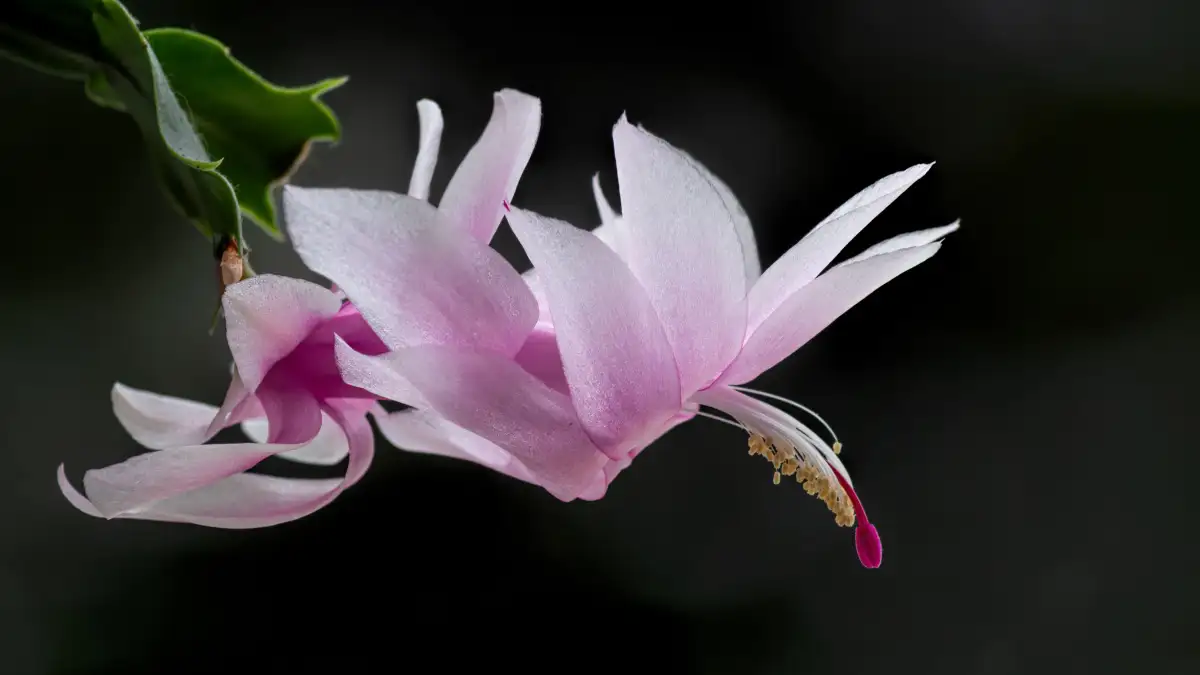
I let a Thanksgiving cactus sit in that third state for most of a November and it never once complained out loud. Four years old, three blooms behind it, sitting on the kitchen windowsill with pink buds just starting to push out of the tips. I watered it on Sunday because Sunday is when I water. The next Sunday I watered it again, because the calendar said so and because the top inch of mix felt dry to my knuckle. That top inch was the lie. Underneath it, the bottom two-thirds of the pot was still dark and heavy, and in a cool room in a plastic pot it was going to stay that way for a while. Nothing about the plant looked different. It just stopped growing.
Lift the pot before you decide anything
Put your hand flat under the pot and pick it up. A six-inch Thanksgiving cactus that was watered yesterday and drained properly has a dense, settled weight to it, low in the hand, like a bag of rice. The same pot nine or ten days later is almost startlingly light — light enough that I have looked into the pot to make sure the plant was still in there. That gap between heavy and light is the whole signal, and it describes the entire root zone at once, not just the surface.
That's the reason I stopped trusting my finger. The knuckle test tells you about the top inch. In a standard peat- or bark-based indoor mix, the top inch can be bone dry while the bottom third is still saturated, especially in plastic, especially in a cool room, especially in winter when the plant is barely drinking. You water based on the dry inch, the bottom stays wet, and the wet bottom is where the roots are.
If you want a number instead of a feel, weigh the pot once right after a thorough watering has drained, write it down, and then weigh it again when it feels like nothing. The two numbers themselves don't matter. The distance between them is yours, and it belongs to that plant, that pot, and that room.
Squeeze the stems, but read them correctly
Between thumb and finger, a hydrated segment on a Thanksgiving cactus is firm and cool, slightly plump, and it holds its shape when you press the edges. A thirsty one is thinner, a little duller in color, and it gives slightly under pressure — you can feel it flex. A segment that has been sitting in wet mix too long feels different in a way you'll recognize the first time: soft, and often pale or yellow right at the joint where it meets the segment below, sometimes translucent. Tug it gently. If it separates with a soft pop and almost no resistance, that is rot, not thirst.
Here's the trap that catches people. On most houseplants, a limp, droopy stem means "water me." On a Thanksgiving cactus, a limp or wrinkled segment does mean underwatering — but a yellow, mushy segment that detaches easily means the opposite problem, and watering it again makes it worse. Two symptoms, one plant, opposite responses. That single confusion is behind a lot of dead Schlumbergera.
Indoors, in a standard potting mix, overwatering is the far more likely of the two. Underwatering announces itself clearly and recovers. Overwatering is silent for weeks and does not.
The fall inversion
Everyone waters more when the buds show up. During the short-day period before bloom, the plant slows down while it sets buds, and the mix therefore stays wet longer than it did in September — same watering volume, longer wet period. If your fall habit is to keep the schedule you used all summer, you are slowly drowning it at the exact moment it's trying to do something difficult. In October and November I water less often than in summer, not more, and I am more careful, not less, about lifting the pot first.
Water temperature, drainage, and the saucer
Fill your jug and let it sit on the counter until it stops feeling cold. Roots on a windowsill plant in November are not equipped for a shock, and cold tap water straight from the pipe is a shock, particularly when the plant is carrying buds. Room-temperature water is the least you can do.
The pot needs at least one drainage hole. Not a layer of gravel at the bottom, not a self-watering insert — a hole, so that water you pour through can leave. Water thoroughly until it runs out the bottom, then stop, and let the pot drain in the sink or on a rack rather than back in the saucer. Anything that collects in the saucer gets dumped within the hour; I usually dump it in ten minutes. If you drop the nursery pot into a decorative cachepot, that cachepot is a saucer. Treat it like one and check it, because it holds water you can't see.
What you don't want is the small-sip habit: a splash every three or four days to keep it evenly moist. That keeps the bottom of the pot permanently damp and the top permanently damp-ish, which is the exact condition root rot develops in. Water thoroughly, less often.
Where the protocol bends
None of this converts into a schedule you can copy from me, because the interval is a property of your setup, not the species. Same plant, same mix: a clay pot in a warm, bright room can dry out in a week, while a plastic pot in a cool spare bedroom might take three. A chunky bark mix dries faster than a dense peat mix. A plant under a grow light in a 72-degree room drinks more than one on a chilly windowsill in January. The readings adjust for all of that automatically, which is the point.
One honest limit: if rot has already reached the stem, no watering method brings that stem back. That's a cutting-and-repotting problem, and a different job. What the two readings buy you is the chance to notice before it gets there — heavy pot, soft base, in time to stop watering and let the mix dry.
It takes about four seconds. Lift the pot, squeeze a segment near the middle of the plant, decide. Then put it back down and walk away, even if it's Sunday.