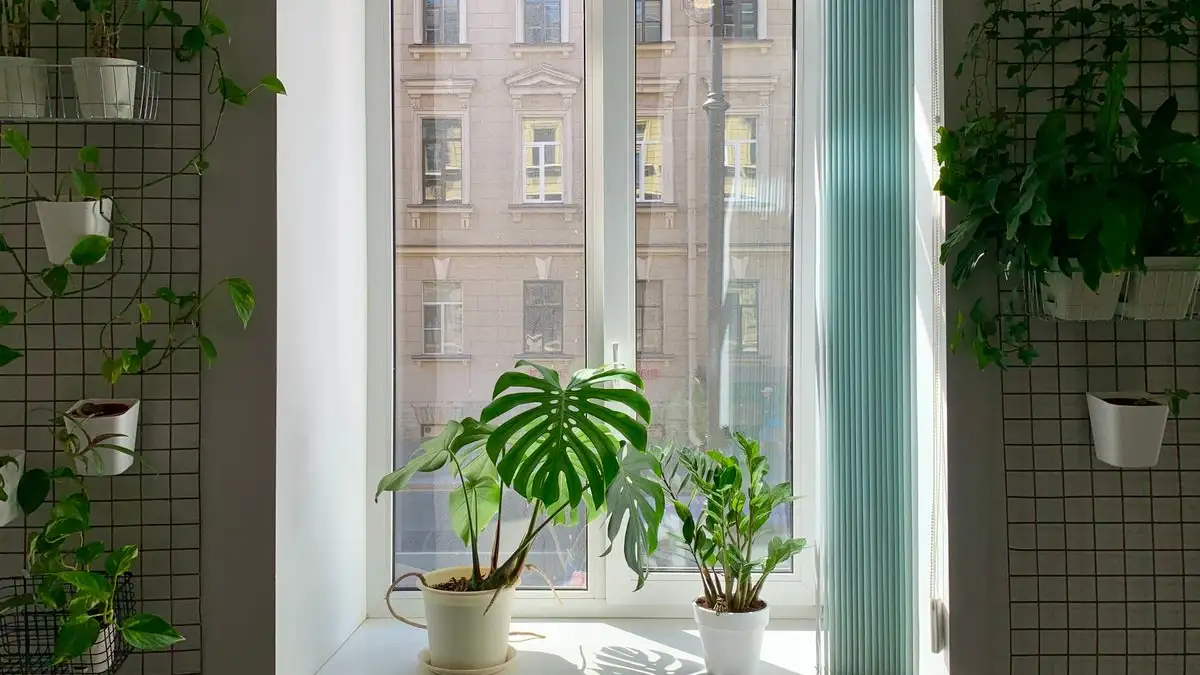
The mistake that rots north window plants isn't watering too often in some vague sense. It's watering on a calendar. A plant in a north window transpires far more slowly than the same plant under bright light, so its potting medium stays wet for days longer, and a weekly soak that would be harmless in a south or east window keeps the root zone saturated long enough to suffocate roots and start rot. The correction isn't a different weekday or a smaller cup. It's reading the pot before you pour: the weight of it in your hands, the medium an inch or two down, and whether that medium is peat-based or bark-based.
The pot tells you before the soil does
Here's what I actually do. I walk to the window in the afternoon, lift the pot with both hands, and feel the bottom of it. A pot that was watered two days ago has a weight I can feel in my wrists. It's dense, it resists slightly, it has opinions. A pot that's ready feels almost hollow, like someone took the plant out and left the pot behind. And then there's the third weight, the one that catches people: heavy down low, dry at the surface. That's the pot that rots things in low light, because the top inch will pass the finger test while the bottom two-thirds is still a saturated sponge.
I never trust the surface alone. I push a finger in to the second knuckle and pay attention to what happens on the way down. Cool and damp at depth means wait, no matter what the top looks like.
Why is that middle state so common under a north window? Light drives transpiration. Stomata open wider in bright conditions, photosynthesis runs, and the plant pulls water through the root ball fast enough that the medium dries from the top down on a fairly predictable arc. In a north window that engine is idling. The plant still needs water. It just doesn't need much of it, and it doesn't need it on the schedule the rest of the house is on. A cool north window in winter compounds everything, because lower temperatures slow evaporation from the medium itself, so the pot sits wet even longer than the light alone would predict.
What rot looks like three weeks before you'd call it rot
The early signals are boring, which is exactly why they get missed. Lower leaves going yellow one at a time while the upper growth still looks fine. A slight softness at the base of the stem right where it meets the medium. Press that spot: a healthy stem is firm and snaps like a green bean, and a rotting one gives, the way a bruised peach gives. Fungus gnats drifting up when you water. And a smell. Not the clean mineral smell of damp soil, but something sour, faintly like a wet basement, coming up out of the drainage holes.
That last one is the one I trust most. If I have to bring the rim of the pot close to my face to check it, the answer is already no water for a while.
It's worth saying that yellowing lower leaves isn't automatically rot. Plants shed old leaves, and something that's been in the same pot for a year will drop a bottom leaf now and then with nothing wrong at all. The distinguishing detail is the stem base. Firm stem, that leaf is just old. Soft stem, or a medium line that looks dark and shrunken where it meets the stem, and you're looking at the real thing.
Terracotta is a slow-release insurance policy in low light
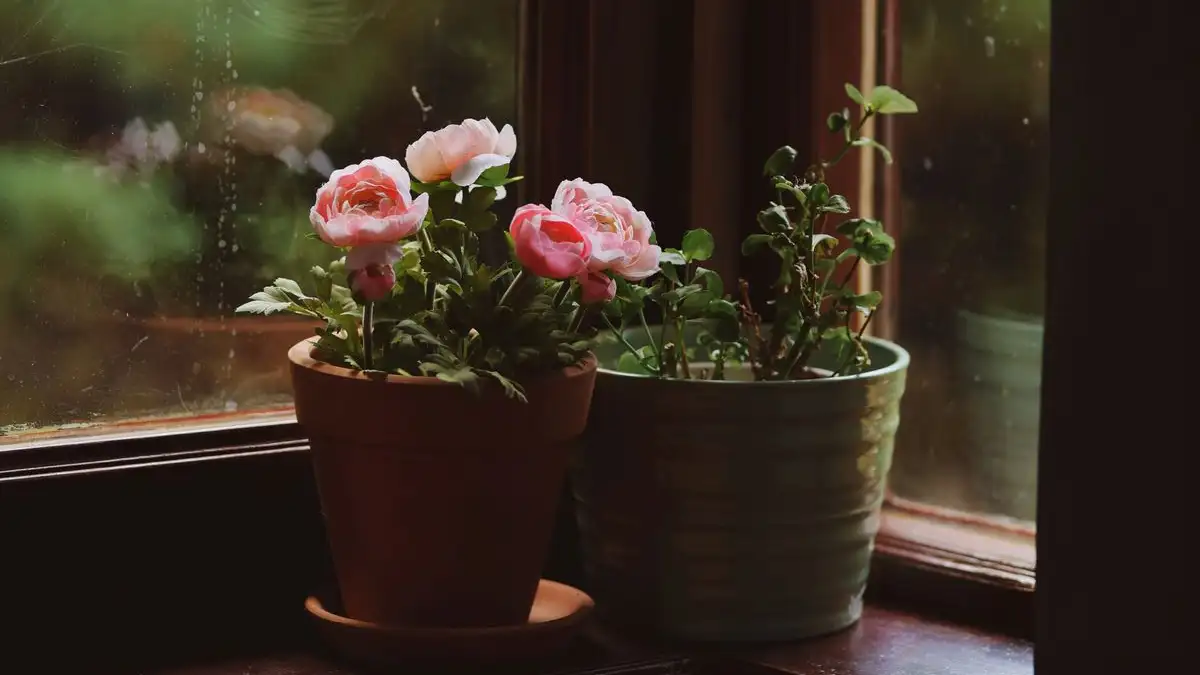
This is where pot type stops being aesthetic and starts being functional. Unglazed terracotta is porous. The wall of the pot wicks moisture out and lets it evaporate off the outside, so the whole root ball dries faster and more evenly than it would in plastic or glazed ceramic. In a north window that's an advantage, sometimes a decisive one. The plants I'm most likely to overwater are the ones I keep in clay, and it's not for the look.
Plastic and glazed pots hold everything in. That isn't a flaw, it's just a different drying curve, and the curve is longer. If your north-window plant is in a glazed pot with no drainage hole, and plenty are, the only thing regulating water is you. You are the drainage. That works fine until you're watering on a weekday habit, and then it doesn't work at all.
Clay has its own complications, and I'd rather name them than pretend they don't exist. It dries unevenly, edges first, so a finger test can mislead you in the opposite direction. Fertilizer salts crust on the rim over a season. And for a plant that genuinely wants evenly moist medium, clay works against you instead of for you. Pot porosity is a dial, not a rule. Turning it one way helps a plant that wants to dry out and hurts one that doesn't.
Peat and bark are not on the same clock
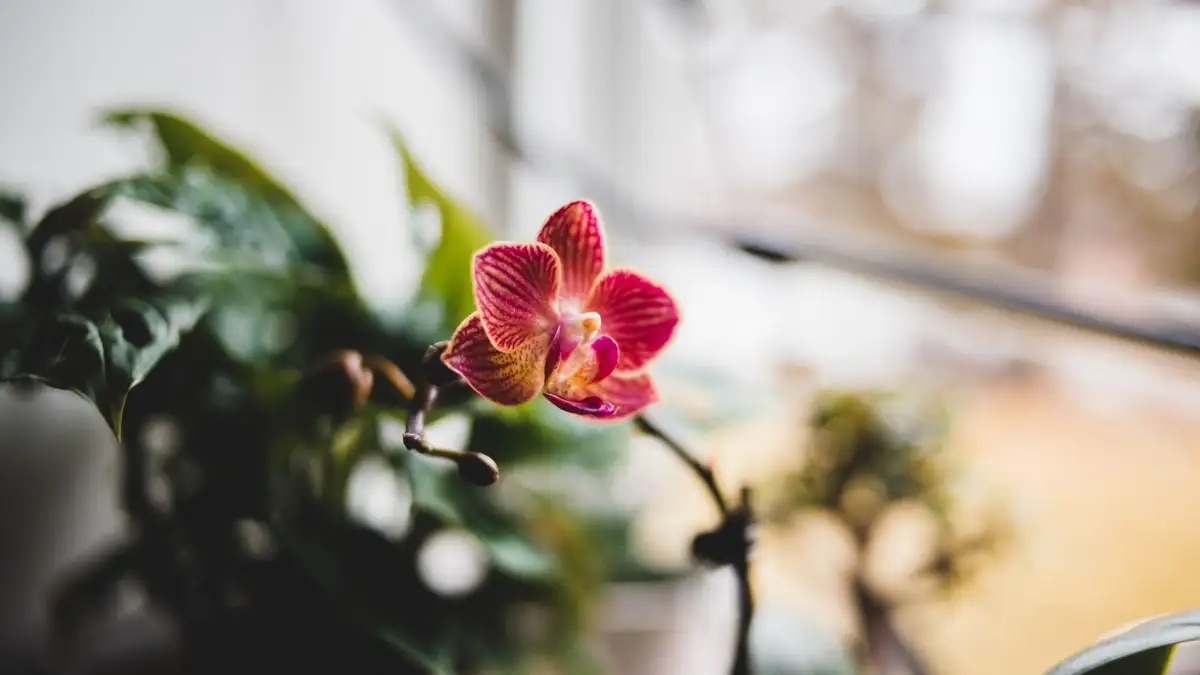
A peat-based houseplant mix and a bark-based orchid mix sitting side by side in the same north window will not be ready for water on the same day. Peat holds water tenaciously and releases it slowly, which is why a peat pot in low light can stay wet at depth for a week and a half while the surface reads dry. Bark behaves differently: the chunks drain fast at first, then the pieces themselves hold water internally, so a bark mix can look dry and loose on top while the bark still has weight to it. Squeeze a chunk of bark between your fingers. If it's cool and gives moisture, wait. Fresh bark also breaks down over a year or two and starts holding water like peat, which is its own slow change in the rules.
So when people ask me how often to water, the honest answer is that I'm running at least two different schedules in the same window, and I check the orchid pot separately from everything else. A probe stuck into bark reads very differently from one stuck into peat, which is part of why I stopped treating any single number as meaningful.
About the ice cubes
Ice cubes on orchids don't work, and it's worth understanding why beyond the general advice. Orchid roots are adapted to warm tropical rain, and a sustained trickle of near-freezing water against them is a shock the root tissue doesn't handle well. The melt is also localized — one cold column of water in one spot while the rest of the root ball sits untouched. And from the perspective of everything above, ice gives you nothing you can read. You never added enough water to change the pot's weight, so you can't lift it and learn anything. You're back to guessing, just with colder hands. Room-temperature water poured through, then a lift of the pot, tells you far more.
The part that isn't about watering at all
I want to be straight about the limits of this. Fixing your watering will stop a north-window plant from rotting. It will not make a light-starved plant bloom. If you've got the weight test down, the medium dries at a reasonable pace, the stems are firm, and the plant still hasn't flowered in a year, that's a light question and it deserves a light answer — a different window, or a supplement. Low light makes watering dangerous; it doesn't make watering irrelevant.
It's also not true that every plant should be allowed to go dry. Some want medium that stays evenly moist, and for those, clay and a fast-draining mix can push you into the opposite problem, where you're watering constantly and the plant is still stressed. The rule was never let everything dry out. The rule is check.
So put the pot back down. Don't water it. Come back tomorrow and lift it again, and the day after that. That repetition is the calendar, and it's a better one than the one on the wall, because it's reading the plant that's actually in front of you instead of the plant you assumed you had in September.
That's the whole correction. Slower transpiration in a north window means the medium runs the show, and the medium changes with pot material and mix type. Water the pot, not the week.