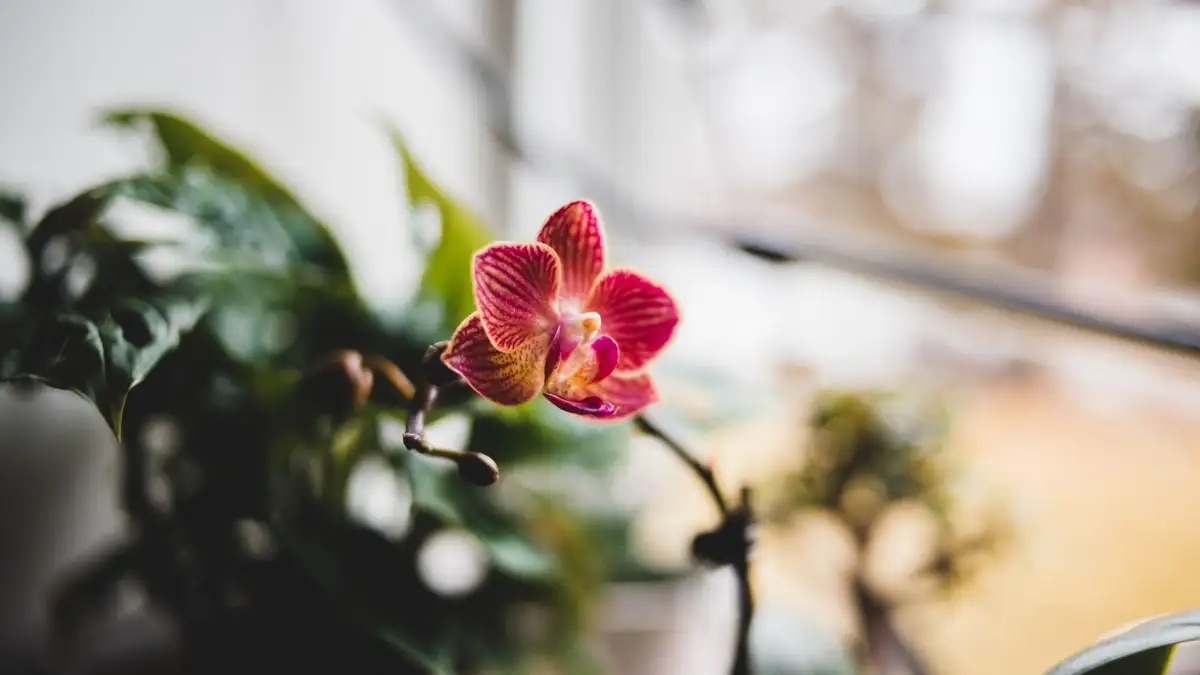
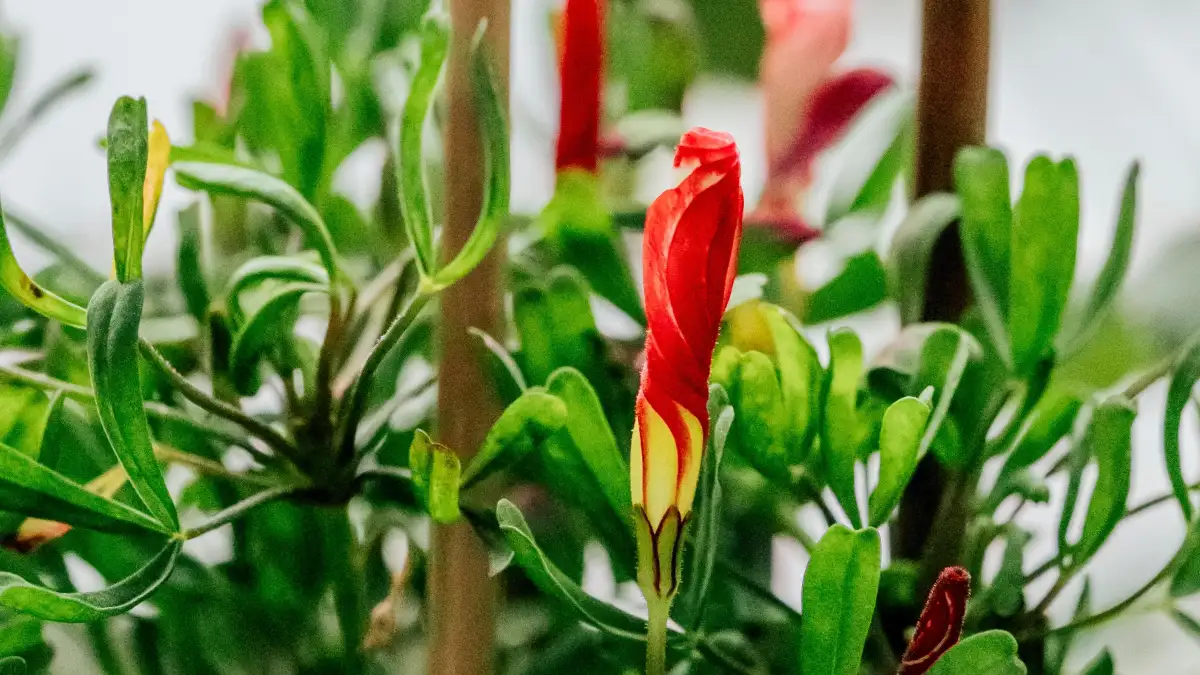
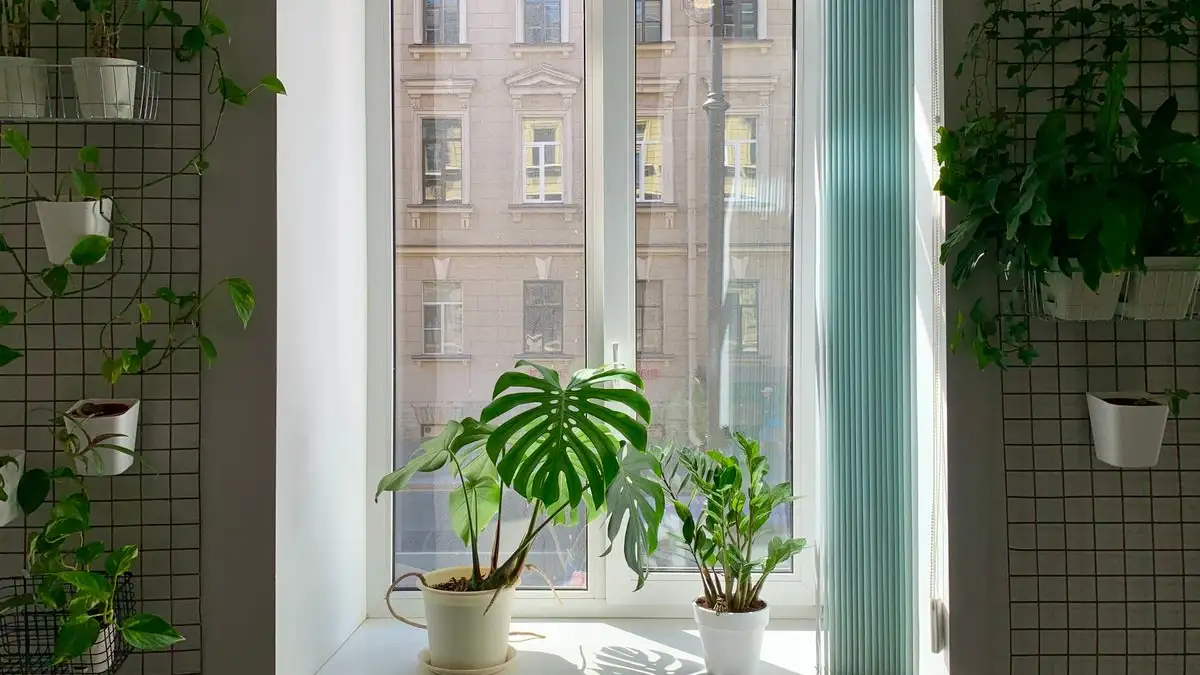
The rebloom trigger that's missing in a north window is almost never light. It's the temperature drop that window makes after dark, held long enough to count as a rest period. A plant that has already flowered once needs a difference between day and night — cool nights in the mid-50s to low 60s Fahrenheit, longer uninterrupted dark, and a potting mix that stays drier than it did during active growth. Give it more sun instead and you mostly get leaves. Give it cool nights and you get a new flower spike.
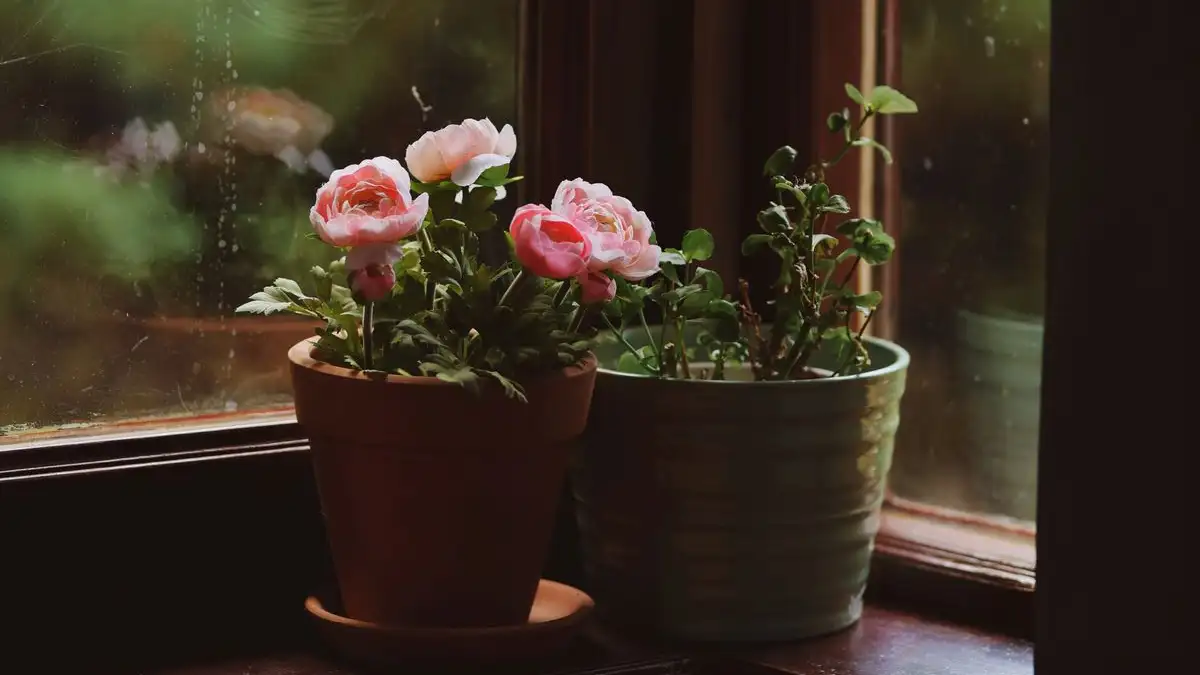
Stand at the window after the furnace shuts off
Before you move that orchid to a brighter sill, do this. Wait until the house has been quiet for a while — in my place that's after the thermostat drops for the night, somewhere between ten and midnight — and go stand at your north window with a thermometer in your hand. Not the hallway thermostat's number. The air a few inches out from the glass, at the height of the leaves.
Crouch so your face is level with the plant. You'll register it on your cheek before the thermometer confirms it: a band of cooler air hanging against the pane. With older windows, a single pane, or weatherstripping that has quit, that band can sit several degrees below the rest of the room.
Leave the thermometer there overnight. Read the low in the morning.
That overnight low is the number that decides whether you get a spike, and it's the number nobody checks. The wall thermostat tells you what the room is. It says nothing about what the plant is actually sitting in.
Why the north window, and why it isn't about light
Phalaenopsis wants bright, indirect light — the kind a north window in most US homes gives all day without one hour of direct sun. It isn't a low-light plant exactly, but it doesn't need the blast of a south-facing pane either, and in summer that blast scorches leaves and washes them out to yellow-green.
What it needs after a bloom cycle ends is a few weeks of nights in the mid-50s to low 60s. That temperature difference is what moves the plant out of vegetative growth and into spike initiation. In a house held at 70 or 72 around the clock, no window will do it on its own — except one that runs cold by nature.
North is the coldest exposure on the house. No sun load warms the glass during the day, and in winter a north-facing pane is often the coldest surface in the room. That isn't a defect to fix. That's the equipment.
Placement is the whole trick
Close is the point. A plant three feet back from the glass is sitting in room air. A plant four to six inches from the pane is sitting in the cool band.
But not touching. A leaf pressed against cold glass can develop water-soaked patches and blackened edges — chilling injury, not disease. Keep a finger-width gap and keep the foliage off the pane.
And look at what's under the sill. If there's a forced-air register blowing up the window, or a baseboard heater, or a radiator, you have the warmest spot in the house instead of the coolest, and no amount of patience will produce a spike there. Deflect the vent, or move the plant to the other end of the window.
The dark half of the trigger
Phalaenopsis
Temperature is the main lever here. Darkness matters less — this one isn't fussy about a lamp across the room the way a holiday cactus is. Get the nights cool, give it a normal dark period, and you've done your part.
Christmas and Thanksgiving cactus
Both halves matter, and the dark half is where people lose the buds. These need long, uninterrupted nights — roughly twelve to fourteen hours of real darkness — combined with cooler temperatures before they'll set bud. A few minutes of light in the middle of that stretch can be enough to stop them. A floor lamp left on in that corner, a porch light leaking through a gap in the curtains, a hallway light that flicks on at 2 a.m. when someone gets up: all of it counts.
If your north window is the only place in the house that runs cool and it's also the room where people watch television at night, put a cardboard box over the plant at dusk and lift it in the morning. It sounds ridiculous. It works.
Thanksgiving cactus tends to set bud earlier in the fall, Christmas cactus a little later. If one sets and the other doesn't in the same window, that's usually why — not a failure on your part.
Kalanchoe
Kalanchoe responds to the shortening days themselves. The lengthening nights of fall are the signal, and the cooler nights that arrive with them reinforce it. Feeding it more in October, hoping for flowers, mostly builds a bigger plant. The cue is photoperiod, and no fertilizer substitutes for it.
Water less, and don't panic about it
A resting plant is using less water. In a cool spot against a cold window the mix also dries more slowly than it would in a warm room, and wet roots in a cool pot are the fastest way to rot out the whole project.
So let the mix dry further between waterings than you'd allow in summer. For a Phalaenopsis in bark, that usually means waiting until the bark is dry a good inch down and the roots have gone from green to a dull silver. Water thoroughly when you do water, let it drain freely, and never leave it standing in a cachepot.
Skip the fertilizer, or cut it back hard. Feeding isn't the trigger, and salts accumulating in a mix that's drying slowly isn't helping anything.
One more: if the plant is due for a repot, wait. Repotting in fall can knock it out of the cycle you're trying to start. Do that job in spring, after the flowers finish.
What you're waiting for, and how not to miss it
Weeks. Not days. Four to eight weeks is the usual gap between the trigger conditions starting and anything visible happening, which is exactly why so many people decide it didn't work and move the plant back to the sunny window in week three.
The new spike emerges low on the stem, between leaves, usually on the opposite side from a leaf — a small green or purplish nub pointing up that grows into a flattened, mitten-shaped tip. Aerial roots come out higher on the stem and have rounded, silvery-white tips. People cut spikes off thinking they're roots. People also wait weeks on a root expecting a spike.
The instrument that settles the question is the same thermometer. If your overnight low at plant level never dropped below 65, you haven't run the experiment yet.
Once the spike is up and growing, ease back to normal watering and stop worrying about the cold. Once buds form, stop moving the plant entirely. Bud blast — every bud dropping before it opens — is usually caused by a temperature swing, a cold draft, or being shuffled from room to room. Ripening fruit nearby gives off ethylene and will do it too, so keep the fruit bowl off that windowsill.
When it doesn't work, and why
Cool nights only convert a plant that has the reserves to flower. If the roots are shot, if the mix has been soggy for a year, if the plant has been in genuinely poor light for months and is running on fumes, no temperature drop will save it. Fix the roots and the light first, then run the cool-night experiment next fall.
Watch the other end of the range, too. Colder is not a stronger version of the same signal. Below about 55 degrees, most of these plants stop functioning and start showing damage — leaf drop, blackened patches, mushy tissue. On a hard cold snap, bring the plant back into the room for the night and set it out again in the morning.
And be honest about your house. Some north windows never get below 68. An unheated bedroom, an enclosed porch that stays above 55, a garage window that doesn't freeze — any of those can substitute. If none of them exist, a cool-night trigger is a fall and winter project you may not be able to run at all, and the honest alternative is to enjoy the foliage and skip the flowers.
The last thing I'd tell anyone is this: the north window was never the problem. The thing people do to fix it — chase more light — is what breaks the cycle.