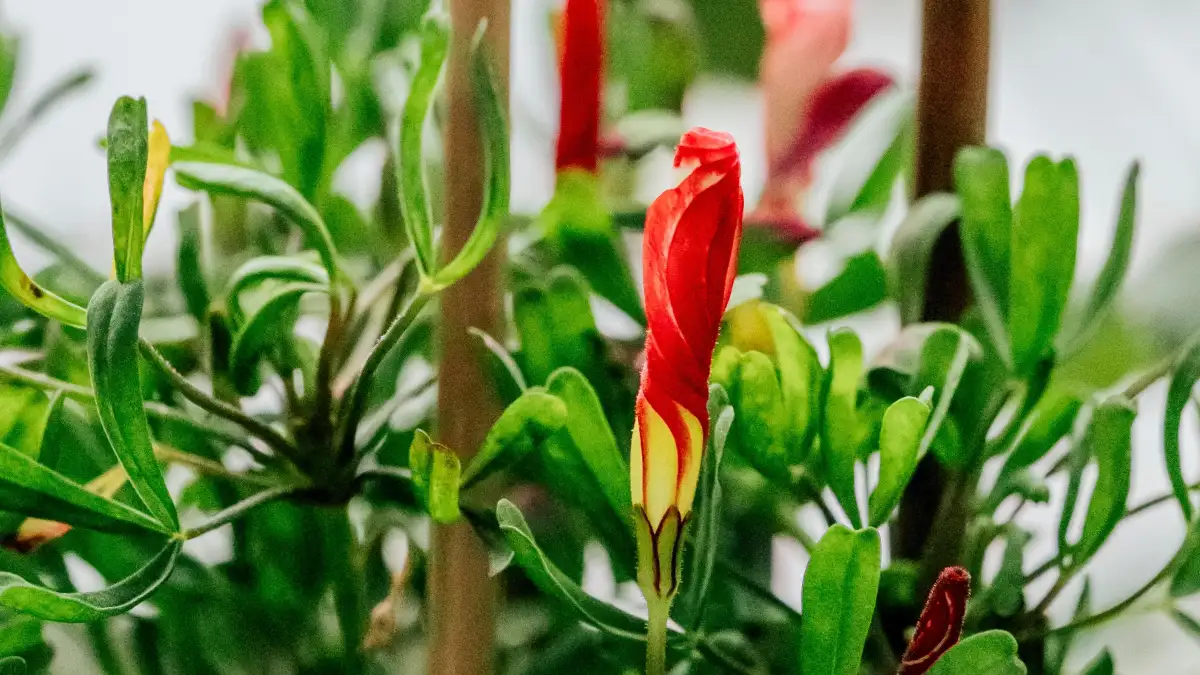
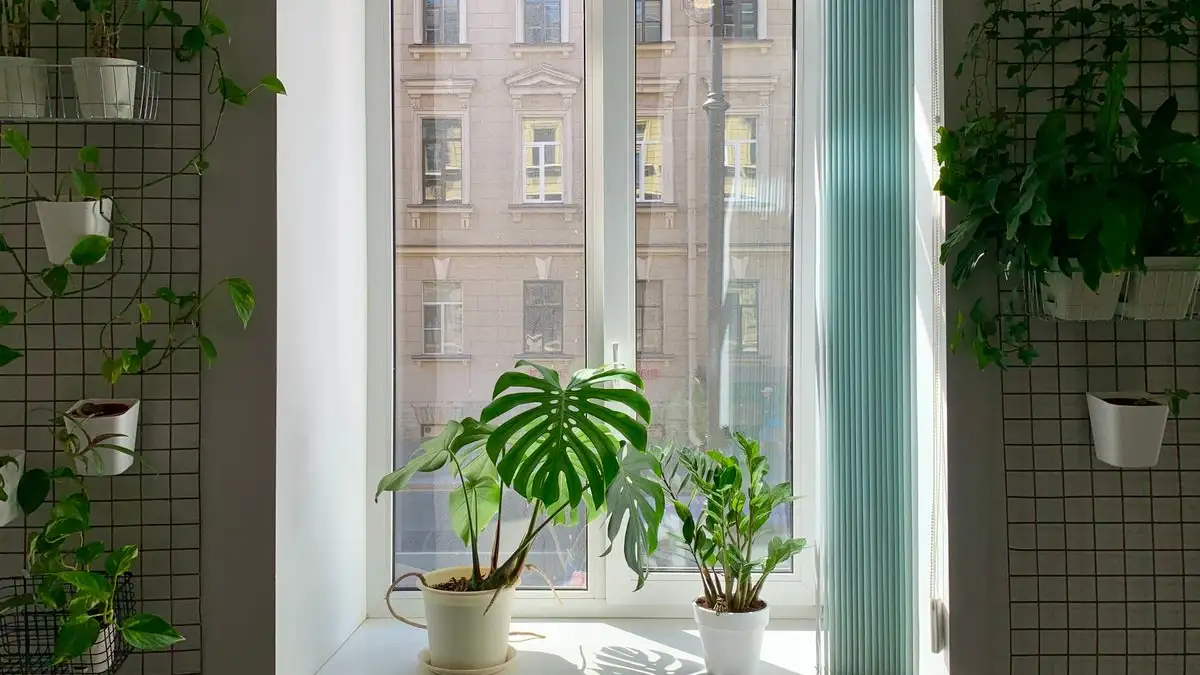
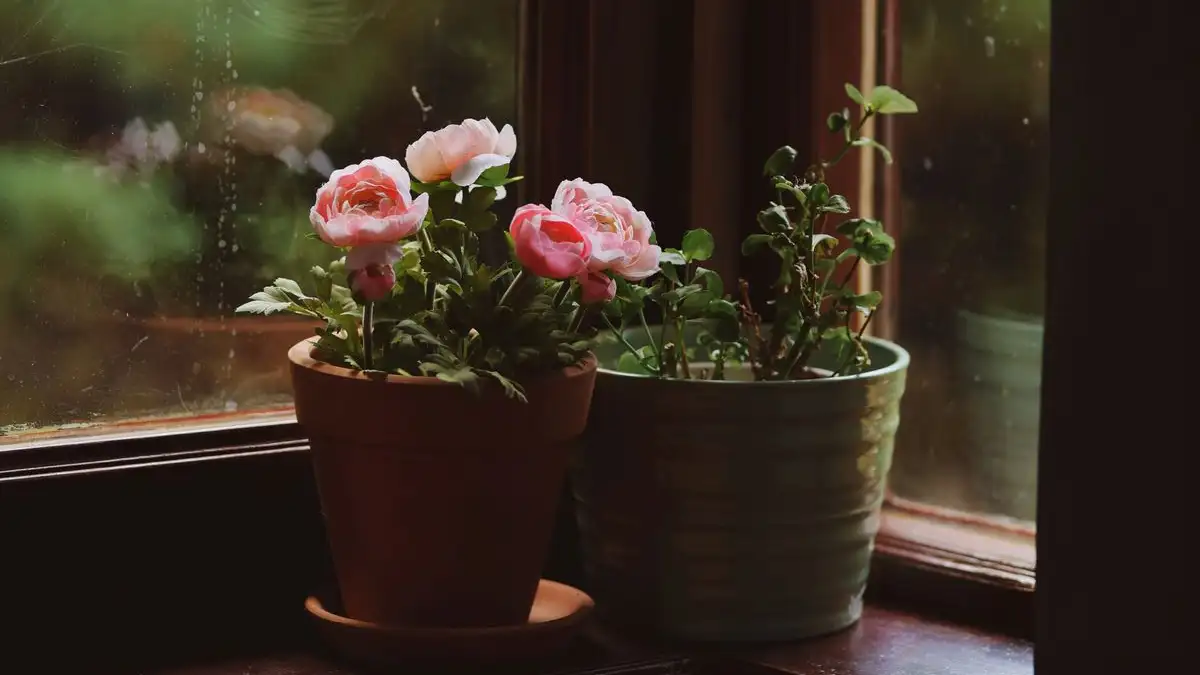
A north-facing window is a light budget you can measure, not a verdict on whether anything will flower in it. In the northern hemisphere it never receives direct sun, so everything it hands a plant arrives as indirect sky light at the low end of the houseplant scale, and that total drops off steeply with distance from the pane. Even so, African violets, peace lilies, Phalaenopsis orchids, and anthuriums will bloom there, provided the light is spent carefully and the other bloom triggers — a night temperature drop, an uninterrupted dark period, and feeding that matches slow growth — are actually paid rather than assumed.
I keep a light meter in the kitchen drawer next to the twist ties, and the first thing I do with any plant that has gone a full year without a bud is carry it to the window and hold the meter flat where the leaves actually sit, not up at the top of the glass where the light looks best. On a bright April afternoon at the pane of my north bedroom window, mine reads somewhere in the neighborhood of 700 to 900 foot-candles. Same afternoon, same meter, on the dresser three feet back: under 200. On a heavy gray afternoon in January, at the glass, in the brightest inch that room has to offer: it barely breaks 100. None of that is mysterious once you see it written down in front of you. The window isn't dark, and it isn't bright. It's a small, shrinking allowance, and every decision you make about the plant either spends that allowance well or wastes it.
Come stand at the glass with me for a moment and you'll feel the rest of it. There is no sun patch on the floor. Not in June, not in December, not ever. The light is flat and shadowless and arrives from the whole sky at once, which is exactly why it never scorches a leaf and also why it never gives a plant the surge a south or west window delivers in an hour. Two plants sitting six inches apart in that room can be living in very different worlds, and the difference is usually not the window itself. It's how far back from it they sit and what else they're getting.
Reading the window as a number instead of a mood
Numbers vary by room, by latitude, by what's outside, and by how good your meter is, so treat my readings as a shape rather than a promise. The shape is this: a north window runs at roughly the same light level as a very bright room with the overhead lights on, except it's free and it moves. The swing across the year is the part people underestimate. In my place, the summer sill does several times what the winter sill does, because the days are longer, the sky light is stronger, and the low winter sun has already started its arc far to the south before it clears the roofline.
Then there's what's outside the glass, which is a second budget on top of the first. A brick wall, a porch roof, or a neighbor's spruce hedge will cut your winter light further and will do it precisely in the months your plants have the least to spare. Deciduous trees are the interesting case, and worth a look out the window before you blame the plant: a maple that shades the room all summer drops its leaves and lets a surprising amount through in January, so some north windows are relatively strongest in the cold months. The other free loss is the window itself. A bug screen can knock down a noticeable share of already-thin light, and so can a film of dust or hard-water spotting, especially on the outer pane where nobody looks. Clean glass with the screen out is the cheapest light you will ever add to a north room.
Distance from the glass is the cheapest thing you can change
Light falls off fast with distance from a window, and it falls off faster than most people expect, because the window is a small source and the room keeps eating what it gives. The number I see over and over in my own rooms is that moving a plant from the sill to three feet back cuts what it receives to a fraction of the sill reading, and moving it to the far side of the room puts it below anything I'd call growing light at all. That matters because a plant on a bookshelf across the room isn't "in a north window." It's in a dim room that happens to have a window in it.
So the first move for a stubborn bloomer is usually not a new plant, a new pot, or a new fertilizer. It's sliding the pot forward until it's within a foot or so of the glass. There's a caveat, and in a cold climate it's a real one: winter glass gets cold, and leaves pressed right against it can be injured on a single-digit night. I keep an inch or two of air between foliage and pane from December through February, and I will use a sheer curtain to take the edge off the chill, knowing it costs me some light in exchange. That trade is usually worth it in a north room, because a chilled plant stops growing and a stopped plant doesn't bloom.
The plants that can actually clear the bar
A north window works for a specific kind of plant: the ones that evolved under something. African violets grow on shaded forest floors in East Africa. Phalaenopsis orchids hang under tree canopy. Peace lilies and anthuriums come out of the understory of tropical forests, where they spend their lives in filtered light and never see the sun directly. Their bloom threshold is low. Low is not the same as zero, and the four are not equally easy.
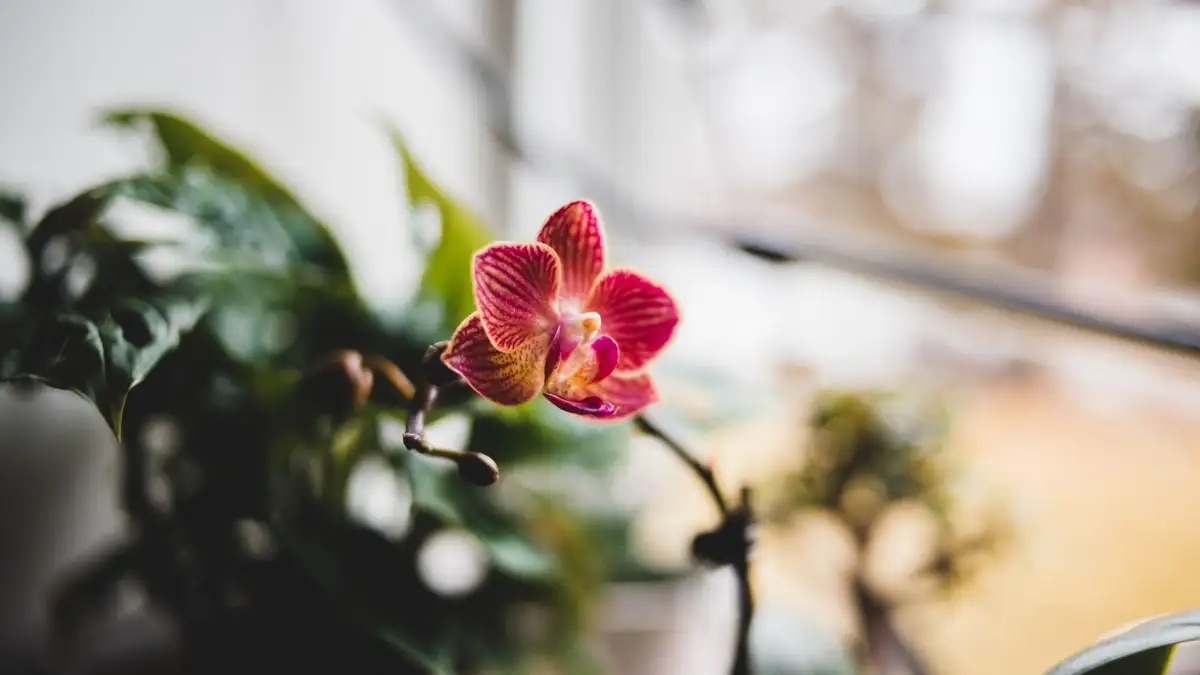
Phalaenopsis is the most forgiving of the four in a north window, mostly because its bloom trigger is temperature rather than raw brightness, so a plant that sits at the sill and gets a cool autumn is often happier than one that sits under a bright ceiling light in a warm room. Anthuriums are steady performers in bright indirect light and will often hold a spathe or two almost year-round once they're mature, though a plant set back from the glass tends to make leaves and skip the flowers. Peace lilies will grow and even bloom in genuinely dim conditions, which is why they get recommended for dark corners, but rebloom is the stingier part: a peace lily that flowers once and then never again is usually a peace lily that's a few feet too far from the window. African violets are the hungriest of the four for light and want the brightest spot the north window can offer, right at the glass, with the leaves never touching it. If you can only keep one of these alive, keep the violet closest to the pane.
The reason this list is short and specific is that it isn't really a list about north windows. It's a list about plants whose bloom threshold sits low enough to be met by indirect sky light. Put a sun-loving flowering plant in the same spot and no amount of patience will do it.
Light is only one of the payments
Flowering is expensive for a plant. It only spends surplus, and light is just one of the accounts it draws on. This is where most north-window failures actually happen, because people fix the light and stop there.
The first overlooked trigger is the night temperature drop. Phalaenopsis in particular initiates flower spikes after a stretch of nights roughly ten to fifteen degrees cooler than its days, sustained for several weeks. A north window in fall, near cool glass in a room you're not heating aggressively, hands you that drop for free. A north window in a warm, sealed apartment does not, and a perfectly healthy orchid will sit there making roots forever. The second is the dark period. Orchids and several other flowering plants do a good part of their respiratory work at night, and a lamp left on until midnight interrupts it. If you keep a reading light next to the plant in the evening, you can be undoing months of good light during the day. A few flowering plants are stricter still, setting buds only after long uninterrupted nights; those are the ones most likely to sulk in a living room that stays lit until late.
Feeding belongs in the same accounting. A plant building buds wants more phosphorus and potassium than a plant just holding leaves, so switching to a bloom-oriented feed when you see the first bud or spike is reasonable. The north-window twist is that slower growth means lower overall demand, and a pot that dries slowly holds salts longer. Underfeeding slightly in a north window is a much smaller mistake than overfeeding, because the plant can't grow its way out of a salt buildup.
The watering rhythm nobody slows down
Here's the mistake I made for years, and the one I see in almost every north-facing room I visit: the plant gets moved to a dimmer window and the watering can keeps its old schedule. Less light means less growth, less transpiration, and slower drying. A pot that went three days between waterings on a south sill might want a week or more at a north window, and in winter it might want considerably longer than that. Water on a calendar in that room and you're watering into soil that never dried out, and the plant responds the way any plant does to roots that stay wet: it stalls, it drops lower leaves, it grows a little and blooms never. If you take one habit away from this, take the pot in your hand and water when it feels light. On a cold north sill in winter, damp soil plus cold glass is also a chill on the roots that a warm room would have hidden.
What a plant looks like when it has slipped below its threshold
You don't need a meter to catch this, though a meter confirms it quickly. The signs are consistent. New leaves come in smaller than the older ones on the same plant. The gaps between leaves stretch out, so the stem looks long and bare. Leaves and petioles lean and reach hard toward the glass. Growth is thin, dark, and floppy instead of compact. And the giveaway: a full season goes by, the plant looks perfectly healthy, and no buds form. That plant is not sick. It's under its flowering threshold, living on just enough energy to stay green.
A plant can sit like that for years in a north window and never die, which is exactly why people conclude north windows don't work. They do work. They just don't work from across the room.
The order I actually do things in
The sequence matters less than doing all of it, but this is the order I've settled into. Clean the glass, and take the screen out if there is one. Move the plant to within a foot of the pane, and rotate it a quarter turn each week so it doesn't lean into the glass. Leave an air gap in winter and use a sheer curtain if the nights bite. Give the orchid its cool autumn nights, and keep the room genuinely dark after dusk for the plants that need it. Feed for bloom when buds appear, and back off if growth is slow. And slow the watering down, feeling the weight of the pot instead of watching the calendar. If a plant still refuses to bloom after a full year of all that, the honest answer is that the light budget is the shortfall, and it needs either a brighter window or a few hours of supplemental light timed to run in the morning rather than into the night, so you're not buying brightness at the cost of the dark period the plant also needs.
A north window will never stop being a small allowance. It will also never be a wall. What it asks is that you stop treating it as one number and start treating it as a budget you manage: keep the plant at the front of it, keep the glass clean, slow the water, pay for a cool night and a dark one, and it will flower.