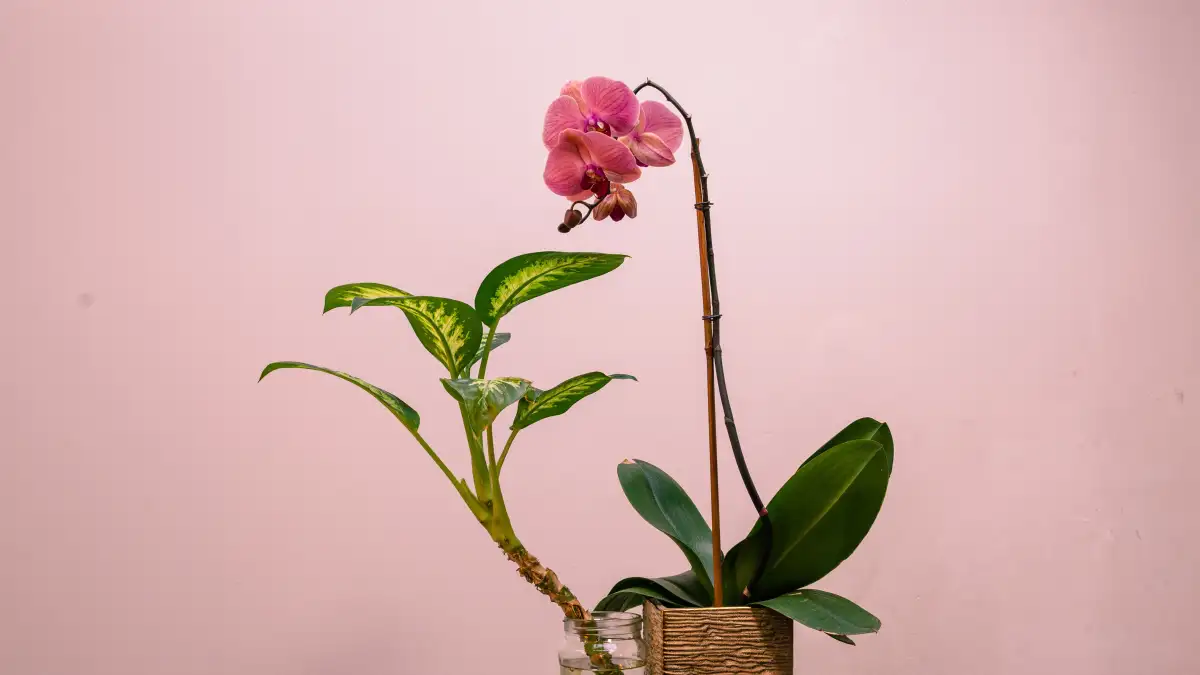
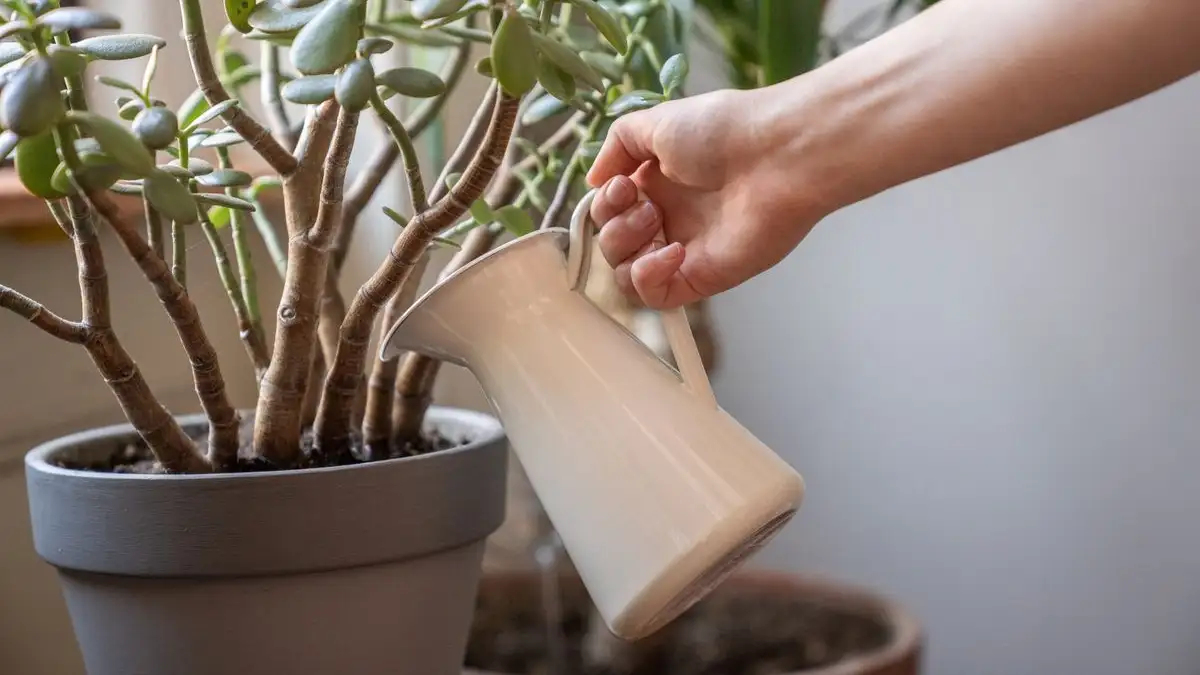
Cold tap water in a northern winter is a water-quality problem before it is ever a watering problem, and the damage it does is specific: it chills the root zone below the range where roots work efficiently, it leaves pale ring-shaped marks where droplets sit on hairy leaves, and it can knock the buds off a flowering plant within a day or two. Water brought to room temperature and poured in the morning prevents all three. Nothing else about the winter routine has to change.
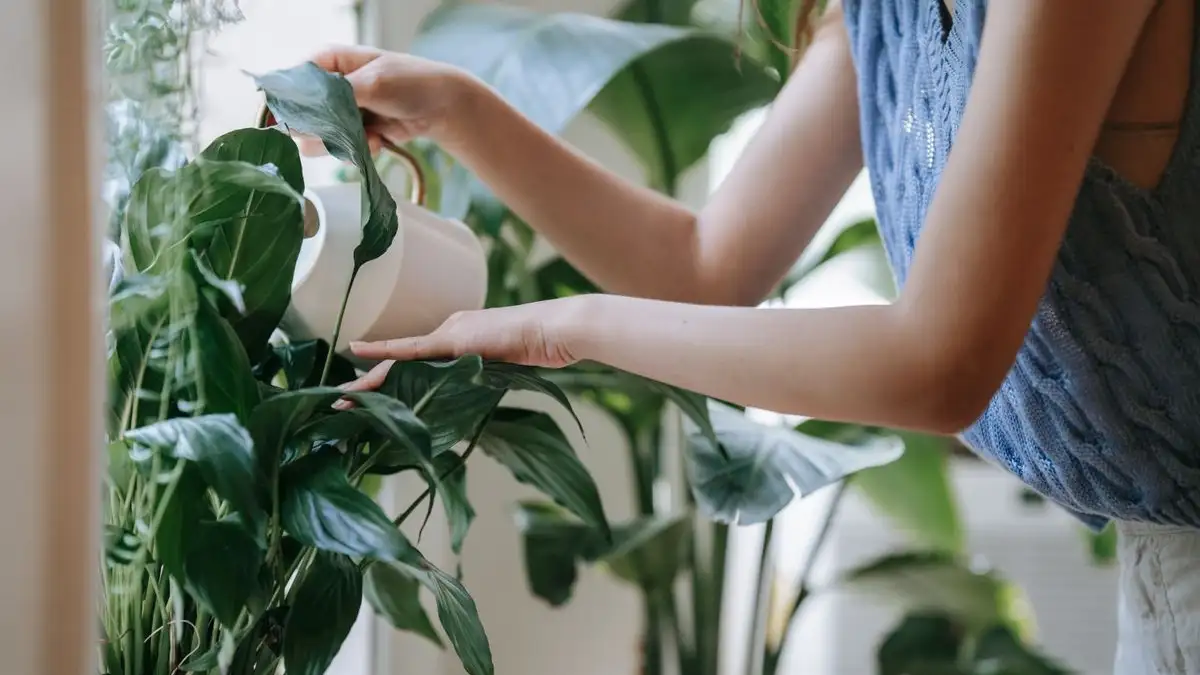
I fill my can the night before, and by morning it is the most useful object in the kitchen. I did not start there. I started with a plant that had four buds, a cold snap, and a Tuesday.
Here is the scene, because it is probably your scene too. It is mid-January. The window over the sink looks out at a street that has not been above freezing in a week. You fill the can from the cold side, and the plastic sweats in your hand — beads of condensation on the outside, which is your first clue that what you are holding is much colder than the room you are standing in. You carry it to the windowsill and water the African violet, or the streptocarpus, or the cyclamen that finally has a flower coming. The water goes in with a hiss into dry soil. You do not think about it again until the next morning.
Then you see them. Pale rings, not spots exactly — rings, as if someone pressed a tiny rubber band against the leaf and lifted it away. They appear where the splash landed, they do not wash off, and they do not spread. They just sit there, a light halo on a dark green leaf, for months.
That is the visible one. The invisible one is happening in the pot.
Why the cold line is colder than you think in January
Municipal water arrives from mains buried below the frost line, and in a northern January that water often comes out of the tap in the forties. Interior pipes warm it a little on the way to the sink; a first flush from a line that runs through an exterior wall warms it less. So the stuff in your can is not merely cool. It is forty-something degrees, and you are pouring it into soil that in a heated room is sitting near seventy.
That is a large drop in one pour. Roots do not have a thermostat. Their membranes and their enzyme activity are tuned to the soil they evolved in, which for most tropical houseplants is warm, and when you pull soil temperature down by fifteen or twenty degrees for a few hours, uptake slows hard. The plant is not dead. It is stalled, and it stays stalled a while, because a cold, wet root ball in the corner of a cool windowsill is the slowest place in the house for water to move.
Where the pot sits matters as much as what is in it. A terracotta pot pressed against cold window glass loses heat from the outside in, so the roots touching the clay — the ones doing most of the work — are the first to feel the cold water and the last to warm back up. A plastic pot sitting inside a cachepot rests in a pocket of still air that insulates both ways. Same plant, same watering, different pot wall, different amount of damage.
The ring spots come from the hairs
African violet leaves are covered in fine hairs, and so are streptocarpus and a handful of other fuzzy-leaved plants people grow on windowsills. A droplet on a smooth leaf rolls off or evaporates from a thin edge. On a hairy leaf, the hairs hold the drop up off the surface and pin it in place, so the water sits there as a bead with a lot of contact area and almost no airflow underneath. Cold water in that position stays cold longer, and the tissue under it chills. The pale ring is the outline of the droplet.
Violet growers have blamed cold water for leaf rings for a very long time, well before anyone was measuring leaf-surface temperature in a kitchen. What convinced me was not the literature, it was the seasonal pattern in my own plants. Same clumsy watering in July, nothing. Do it in January and I get rings. That is a pretty blunt experiment, but it repeats every year.
The buds are the expensive part
If the plant is holding buds, the stakes go up. A chilled root zone slows water uptake at exactly the moment the plant is running its most water-hungry process. Buds are the least anchored thing on the plant, and a plant under brief water stress aborts them first.
What it looks like is this. The buds go from fat and slightly shiny to dull. Then the stem behind the bud yellows. Then they are on the windowsill, usually inside forty-eight hours of the watering that caused it. People see that and start looking for rot, insects, or a disease, and by the time they have looked, the evidence has already dropped off the plant.
It was the water temperature. That is the whole answer most of the time.
A test you can do with your wrist
Fill the can, then run a little of the water over the inside of your wrist. If it reads cool, it is cool, and that is all you need to know. The skin on the inside of the wrist is thin and reads temperature more sharply than your palm, which is why this is the same trick people use for testing a bath.
Then let the can stand until it no longer feels cool against your wrist. In a normally heated room, a full can gets there in a few hours. Overnight is the version that never fails, which is why I stopped trying to shortcut it. Two things will defeat the whole exercise: setting the can back down on the cold windowsill, or leaving it in a garage or an unheated mudroom. Water that is standing somewhere cold is still cold water.
If your house runs cool, around the low sixties, the can will settle at that temperature too, and that is fine, because the soil is at that temperature as well. The rule is not a number on a dial. The rule is that the water and the soil match.
Why the old jug habit survives, and which half of it is real
The habit of leaving a jug out overnight gets explained as a chlorine fix, and that explanation is only half honest. Chlorine does dissipate from standing water, but slowly, and it does not take chloramine with it — plenty of municipal systems use chloramine, and that stays in the can. So if your water is chloraminated, the jug is doing almost nothing on that front.
It does not matter, because the temperature reason is the one that holds up every single time, and it is the one that was hurting the plant.
Morning, not evening
Water in the morning. Any splash that catches the foliage then has the whole day of ordinary room air moving past it to dry. Water at nine at night and the same splash sits on the leaf through the coolest hours of the day, which is the longest possible exposure to the exact condition that causes rings. Same water, same plant, different clock.
Do not fix this with warm water
The obvious shortcut is to run the hot tap and top off the can. Do not. Water noticeably above room temperature stresses roots in the other direction, and the mixture is guesswork — you cannot feel your way to neutral through a blend you did not measure. Overshooting into warm is its own problem, and it is a harder one to notice, because there is no ring spot to tell you that you did it. Tepid is not the target. Neutral is.
Cold shock or overwatering, and how to tell them apart
Winter watering frequency drops. Growth slows, the plant uses less, and the soil stays wet longer — and the two classic winter mistakes travel together, because the same slowed metabolism that makes cold water more damaging also makes a wet pot more dangerous. Both produce yellowing lower leaves, drooping, and failed buds, and both get worse in January.
The difference is timing. Cold-water damage shows up within a day or two of a watering, in a plant that looked fine the day before you watered it. Overwatering accumulates — the soil is still damp a week later, the pot feels heavy, and the lower leaves go soft rather than dry and crisp at the edges.
If you genuinely cannot tell which one you are looking at, do not water again until the top inch of soil is dry. You cannot fix a cold shock by adding more water, of either temperature.
What the habit actually looks like
There is no equipment in this. Fill the can after dinner. Leave it on the counter, not the sill. Wake up, feel the water against your wrist, water in the morning, walk away. The four buds that would have hit the sill in February open in February instead, and the leaves underneath them stay clean and dark. That is the entire intervention, and it costs one night of forethought.