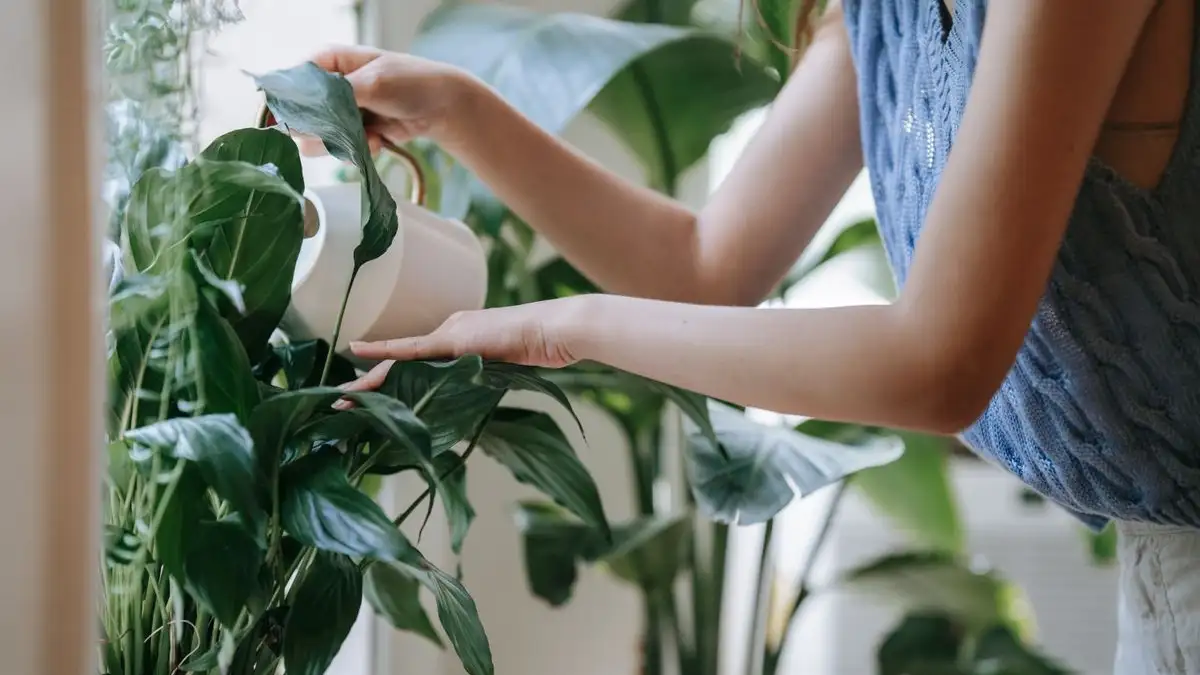
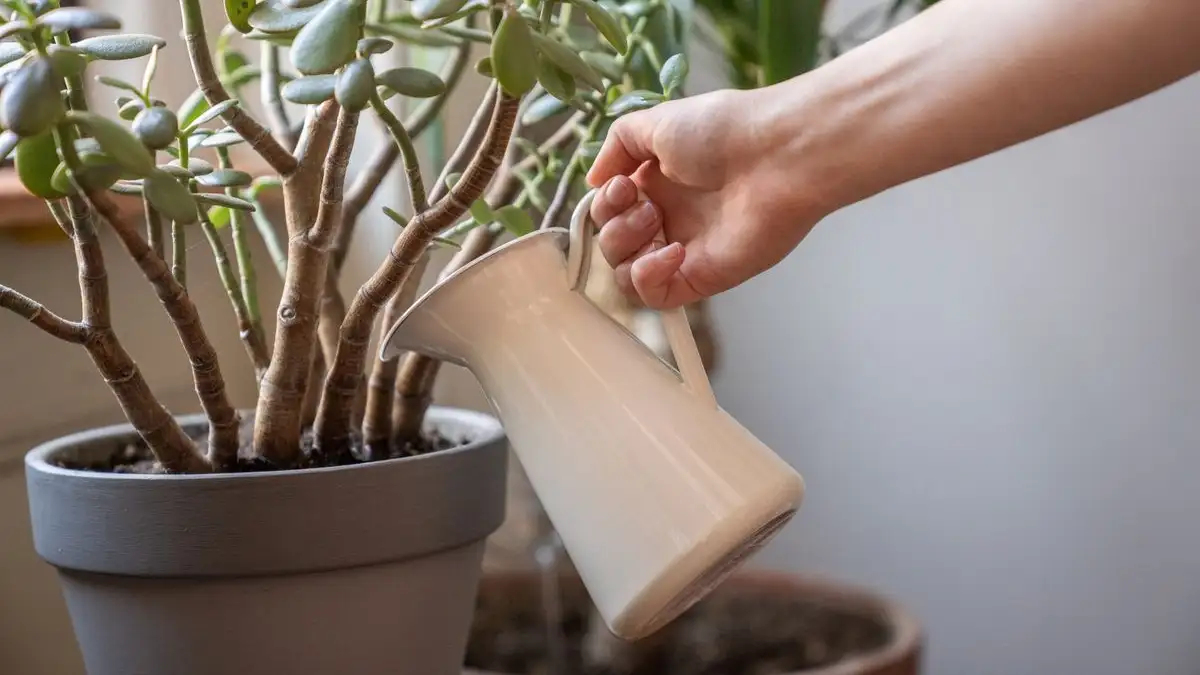
The ice cube method fails Phalaenopsis because it waters the wrong place, at the wrong temperature, in the wrong volume. A single cube melts against one small patch of bark, chilling the root surface far below anything orchid roots meet in the wild, concentrating the dissolved salts of that patch into the same few cubic inches, and often leaving meltwater sitting in the growing point of the crown, the one place where a Phalaenopsis can be killed outright by water. What the plant actually wants is room-temperature water poured through the pot until it runs out the bottom, drained completely, and given when the roots turn silvery rather than on a fixed weekday.
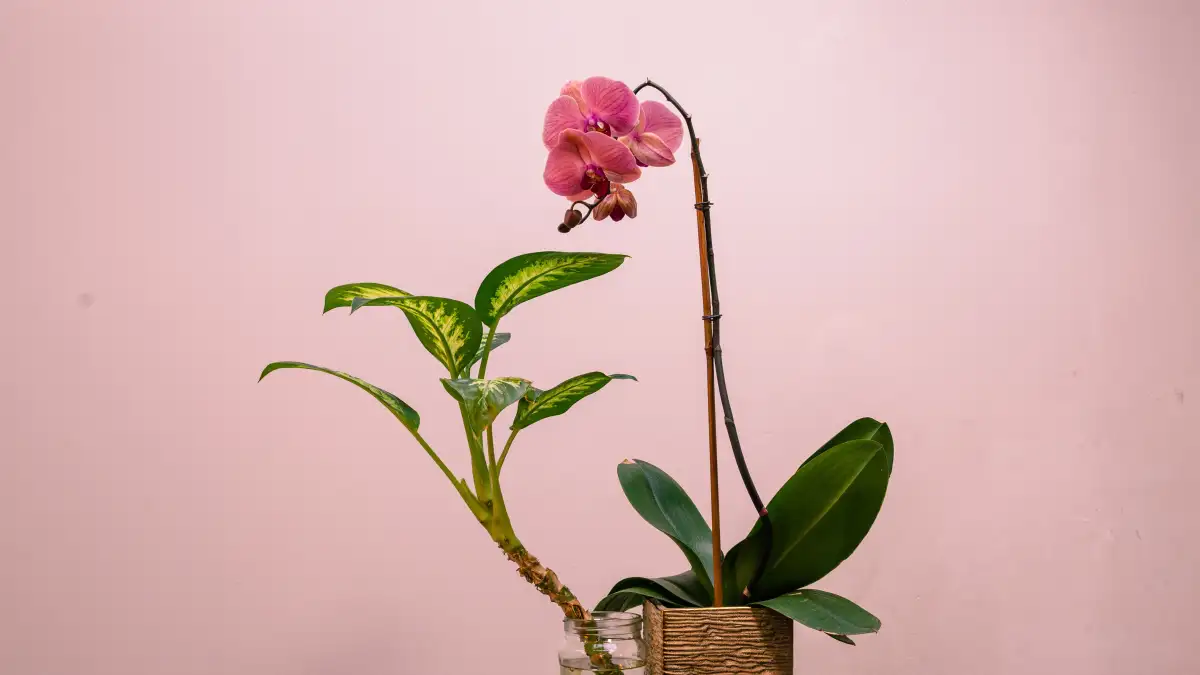
I still have one of those care tags in a drawer. White plastic, stapled to a stake, a little water-drop icon next to the words "one ice cube weekly." I followed it for the better part of a year, and the plant did not die, which is exactly what makes the instruction so hard to argue with. A Phalaenopsis can coast for months on stored reserves while its root system quietly shrinks underneath it.
The afternoon I gave up on it, I had the inner pot out on the kitchen counter. Slide that pot out of the decorative one and hold it up against a bright window and you can see the whole story through the side: the top inch of bark dark and damp and clumped together, the bottom of the pot pale and loose and dry, bark flaking away from the roots. The roots up top were green and fat. The roots near the bottom were gray and papery, and when I pinched one it collapsed into a hollow tube. That is the ice cube's signature. Not a dead plant yet, but a plant that had been drinking from one shallow pocket for months while everything below it starved.
Three things happen in that pocket, and they are worth taking apart separately, because the care tag gives you no way to notice any of them.
The chill at the root surface
An ice cube sits at 32°F, and the meltwater stays close to that for the several minutes it takes to disappear. Phalaenopsis roots are epiphytic. In habitat they grip tree bark under a warm, humid canopy and the water they meet is rain at air temperature. Nothing in that life prepares root tissue for near-freezing contact, and the cold does the opposite of what you want: it slows the metabolic activity in the exact tissue that is supposed to be taking up water. So you chill the part you are trying to hydrate, and the rest of the root mass stays dry anyway, because one cube's worth of water never travels more than a couple of inches down through bark.
The salt pocket
Water leaves. What was dissolved in it does not. Every cube wets a small volume of bark and a few roots; as that moisture is taken up or evaporates, the fertilizer residue and the minerals from your tap water stay behind in that same small volume. Week after week the concentration in that one patch climbs. This is the part that never shows up in a symptom photo, because the damage is chemical and slow, and it happens below the surface where you are not looking. A proper watering does the opposite of what the cube does: it pushes more water through the pot than the bark can hold, and the excess carries the accumulated salts out the bottom with it. The cube never runs out of anything. It has nowhere to put what it dissolves.
The water in the crown
If the cube rests against the base of the leaves, and it usually does, because that is the flattest place to set it, the meltwater trickles into the growing point. A Phalaenopsis crown is a tight rosette of overlapping leaf bases, and it holds water like a small cup. In a still, cool room that water can sit for days. That is the starting condition for crown rot, and crown rot is usually the end of the plant rather than a setback, because a Phalaenopsis grows from a single apical meristem. Lose the crown and you have lost the only growing point the plant had. What is left is a stump that may, over a long time, throw a keiki. Waiting for one is not the same thing as having an orchid.
Where the instruction came from
None of this is a secret that orchid growers forgot to share. The ice cube is a metering device. It appeared on mass-market care tags as a way to keep a first-time owner from drowning a plant in the first month: one cube, once a week, no judgment required. Judged on that goal it works, sort of. It prevents the worst overwatering and keeps the plant presentable through the selling season. Judged as orchid culture, it is a compromise nobody who grows these plants would choose for themselves.
And it does one more piece of damage that is easy to overlook. It teaches you to water by the calendar. The ice cube is a schedule with a physical shape, and as long as you are using it, you never learn to read the plant.
What replaces it
Water by root color, not by the day of the week. Phalaenopsis roots have a visible tell. Silvery, gray-green, a little dull means the bark has dried enough and the plant is ready. Bright green, plump, with a damp sheen means it was watered recently and can wait. If the inner pot is clear, tilt it under a light and look at the roots pressed against the side. If it is not, lift the inner pot out and check the roots at the surface, or go by weight. A freshly watered pot is heavy, a dry one is surprisingly light, and your hand learns the difference faster than you would expect.
Then the watering itself. Room-temperature water, at the sink, poured through the pot until it runs freely out the bottom. Not a measured splash. Pour, let it drain, pour again, so the bark actually soaks instead of shedding the water down one channel. When you are done, let it drain completely, tip out anything that collected in the crown, and empty whatever the pot was sitting in. A pot left standing in an inch of water is just a slower version of the same mistake. How often this happens varies: roughly weekly in a warm, bright room in summer, three weeks or more on a cool windowsill in January. The interval is not the method. The method is thorough water, full drainage, and waiting for silver.
Every month or two, give it more water than usual with nothing added and let it flush hard. That is how the minerals from tap water and the leftover fertilizer salts get pushed out of the bark instead of settling into it. Most Phalaenopsis do fine on ordinary tap water. It is not the water that causes trouble, it is the buildup, and an occasional flush handles it. If a white crust forms on the bark or along the rim of the pot, you are overdue.
The leaf symptom that gets misread
Soft, wrinkled, droopy leaves are the most common reason people start watering more, and the least reliable thirst signal a Phalaenopsis has. Deflated leaves mean the roots are not supplying them. That could be because the bark is dust dry and the plant genuinely needs water, but after months of ice cubes it usually means the roots have already been damaged and cannot take up anything you give them. Adding water on top of that makes it worse, not better. So when the leaves go soft, the response is not more water. The response is to look at the roots. Hollow, papery, or mushy roots explain the leaves, and what the plant needs then is fewer and more thorough waterings plus warmth, not a rescue pour. New leaves that come in smaller than the last one are the slow-motion version of the same message.
Where this gets messier than a rule
Root color is the best cue available, but it is not perfect in every setup. In sphagnum moss, the surface stays dark long after the interior has dried, so the silvery tell is much harder to read, and pot weight plus the feel of the moss at the top, crisp versus damp, carries more of the decision. A plant with a small root system in a big pot will show silvery roots while the lower bark is still wet, and watering the whole pot on that cue keeps the bottom soggy; there, a smaller volume poured slowly around the roots is the compromise. Winter slows everything, and a windowsill orchid may sit for weeks without going silver. Do not reach for the calendar when that happens.
And yes, some people have used the ice cube for years without an obvious problem. That is possible. A tolerant hybrid, a warm dry room where a stray trickle of meltwater evaporates instead of pooling, a crown that never got wet. What that proves is that the plant was forgiving, not that the method is sound. The failure mode, when it comes, is fast and quiet and it happens below the bark, out of sight. Which is why the whole thing is worth replacing with something you can actually watch: water through, drain fully, and pour again when the roots go silver.