Christmas cactus should be watered when the top inch of potting mix is dry and the pot feels light in the hand, not on a weekly calendar, and because that test measures moisture and weight rather than days, the same plant gets watered correctly whether it sits in porous terracotta or in glazed ceramic. The interval changes. The rule does not.
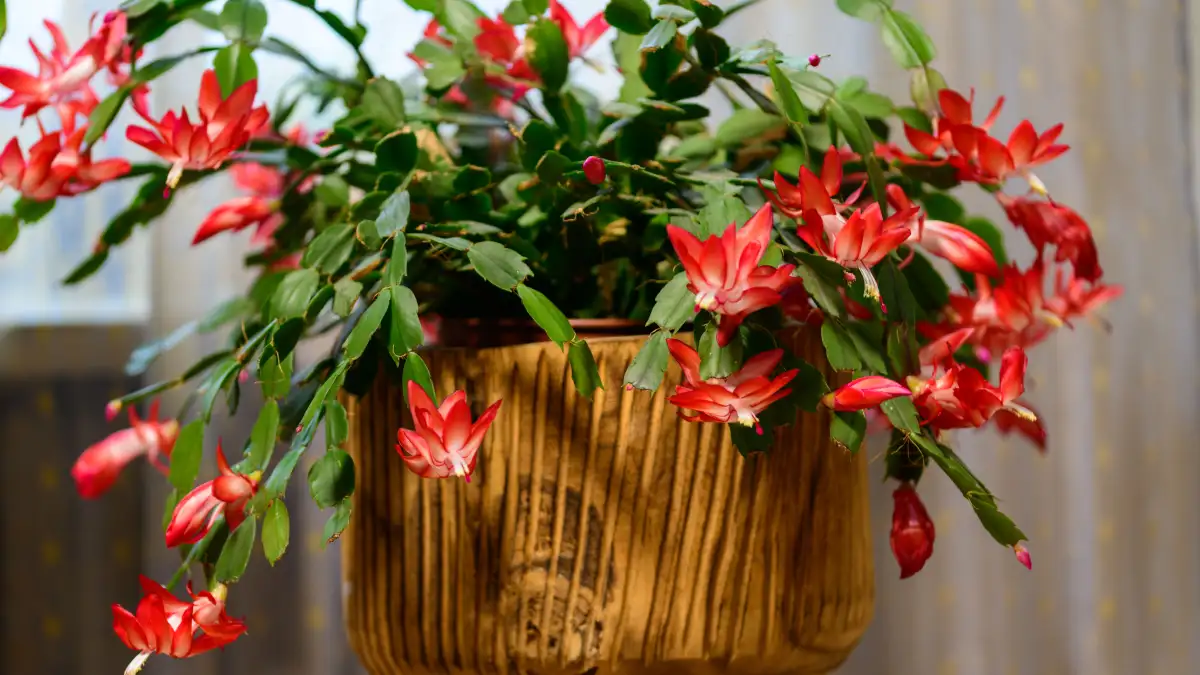
There are two Christmas cacti on my windowsill that are, as far as I can tell, the same plant. Same source, same age, same bark-heavy mix, sitting a foot apart. One is in unglazed terracotta, the other in glazed ceramic of the same diameter. For a couple of years I watered them on the same day, because that felt fair, and every winter one of them sulked.
The terracotta pot was dry days ahead of the glazed one, every single time. I would water both on a Wednesday, and by the weekend the terracotta pot was light as a paper cup while the glazed one still had real weight in it. That is the whole lesson. Potting mix does not dry on a calendar. It dries on a curve set by the pot material, the room's humidity, how much air moves past the plant, and how much root is packed in there.
What I check, in order
I push a finger into the mix to about the first knuckle, an inch or so. What I am feeling for is not "is it wet" but "is it dry at depth." Cool and crumbly, with no cling, means dry. Cool and slightly slick means wait.
Then I lift the pot. This is the step most people skip, and it is the one that saves plants. Dry mix at the surface plus a heavy pot means there is still water sitting down where the root ball is, and that is exactly the zone where Christmas cactus roots go bad. Dry at the inch and light in the hand: now it gets water.
The feel test and the weight test disagree more often than you would think, because surface mix can dry in a day while the bottom half of the pot stays damp for another week.
Watering from the top, and the saucer
When it is time, I water from the top, slowly and evenly, until water runs out the drainage hole. That full flush is how I know the whole root ball got wet rather than just the top inch. Then I empty whatever collected in the saucer within about half an hour.
That half hour matters more than it sounds. These plants are epiphytes. In the wild they grow on tree branches in pockets of leaf litter, with roots that expect air between soakings rather than a constant wick of moisture. A saucer full of water under a bark-based mix keeps the bottom of the pot saturated while the surface reads dry. You can spend a month watering correctly by the finger test and still be slowly drowning the roots from below.
Room-temperature water, and bud drop
I keep a pitcher on the counter so the water is roughly room temperature. Straight cold tap water in January, in a house that runs cool, is a shock to fine roots, and on a plant that is setting or holding buds it is one of the easier ways to watch those buds yellow and drop before they ever open. A pitcher on the counter solves that with no equipment at all.
Read the segments, but read the mix first
A limp, wrinkled, soft segment looks like thirst. Usually it is not. If the mix is still damp a week after watering and the segments are soft and dull, you are looking at roots that have rotted and can no longer take up water. The plant is wilting in wet soil. Watering it again because it looks thirsty is the move that finishes it off.
The underwatering picture is different: segments dry, thin, puckered, almost papery, on a plant whose mix is bone dry and whose pot is feather-light. That plant wants a drink, and it will plump back within a day or two.
Same visible symptom, opposite cause. The mix and the pot weight are what separate them. If the soil is wet and the plant is limp, the answer is less water, not more. If the soil is dust and the plant is limp, the answer is a thorough watering from the top.
Why terracotta and glazed pots need the same rule and different intervals
Unglazed terracotta is porous. Water moves through the walls and evaporates off the outside, which is why the pot feels cool against your palm and why it goes light so much faster. Glazed ceramic and plastic hold that moisture in. Same plant, same mix, same room, same size: the terracotta pot can cycle through a full dry-down in the time the glazed one takes to lose half its water.
That difference is why a schedule fails and a test does not. The test, dry at the inch and light in the hand, produces a different answer in each pot, which is exactly what you want. In a dry, heated house in midwinter, a small terracotta pot might be ready again in four or five days while a glazed pot of the same diameter takes two weeks. If you water both on day seven, you are overwatering one and slightly underwatering the other, every week, all winter.
Two other things bend the interval. Pot size matters as much as material, since a large volume of mix holds far more water than a small one even in the same clay. And root mass matters: a plant that has filled its pot with roots drinks fast, while a small root ball in a big pot sits in moisture it cannot use.
The rest period after flowering
Once the flowers finish, the plant moves into a slower, cooler stretch and uses less water. I let the mix dry further between waterings than I would in spring, but not to the point of bone dry for days on end. The roots are still alive and still should not desiccate. Dry at the inch and light is still the test; I just expect to pass it less often.
When new growth starts pushing at the tips, the plant is drinking again and the intervals tighten up on their own.
What I ignore
Care tags with watering intervals. Apps that schedule by species. And probe-type moisture meters, which read the salts in a bark mix at least as much as they read water; mine told me a bone-dry pot was moist often enough that I stopped believing it. My finger and the weight of the pot have never once lied to me.
If you want to replace a schedule with something, replace it with a question you ask every few days: is the top inch dry, and is this pot light? Ask it in the terracotta and ask it in the glazed ceramic, and you will water the same plant two different ways and be right both times.