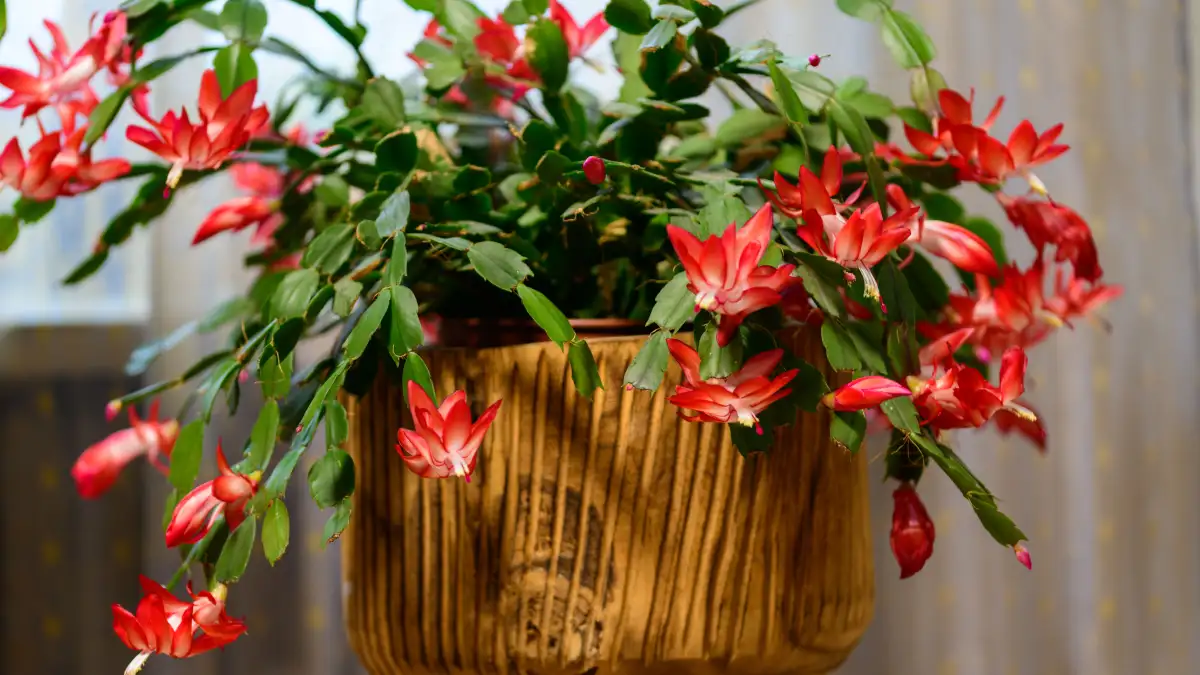
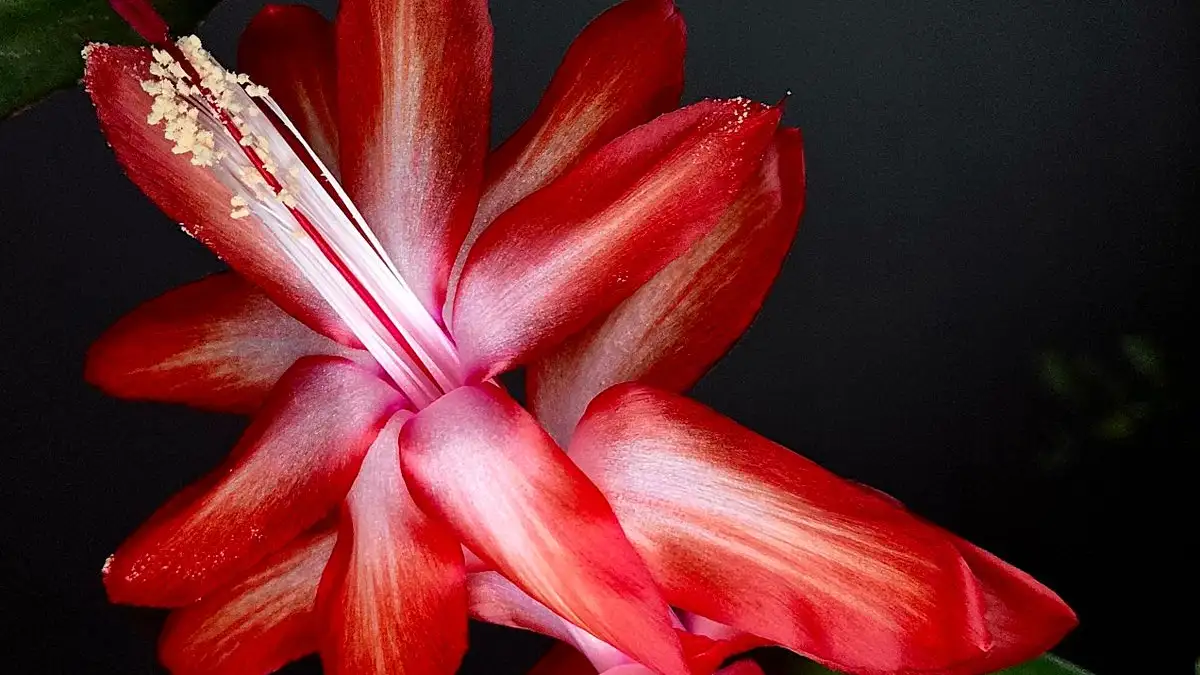
Getting a Christmas cactus to bloom again is a matter of matching care to phase rather than following a monthly routine, and the phase that decides everything starts in early fall, when the plant needs long uninterrupted nights and cooler temperatures to set flower buds. Nothing visible happens during those first two or three weeks, which is why so many holiday cacti never flower: the fall conditions have to be in place before the buds appear, not after. Post-bloom rest, summer growth, and autumn bud set each ask for different water, food, and light, and the same action that is correct in July is wrong in October.
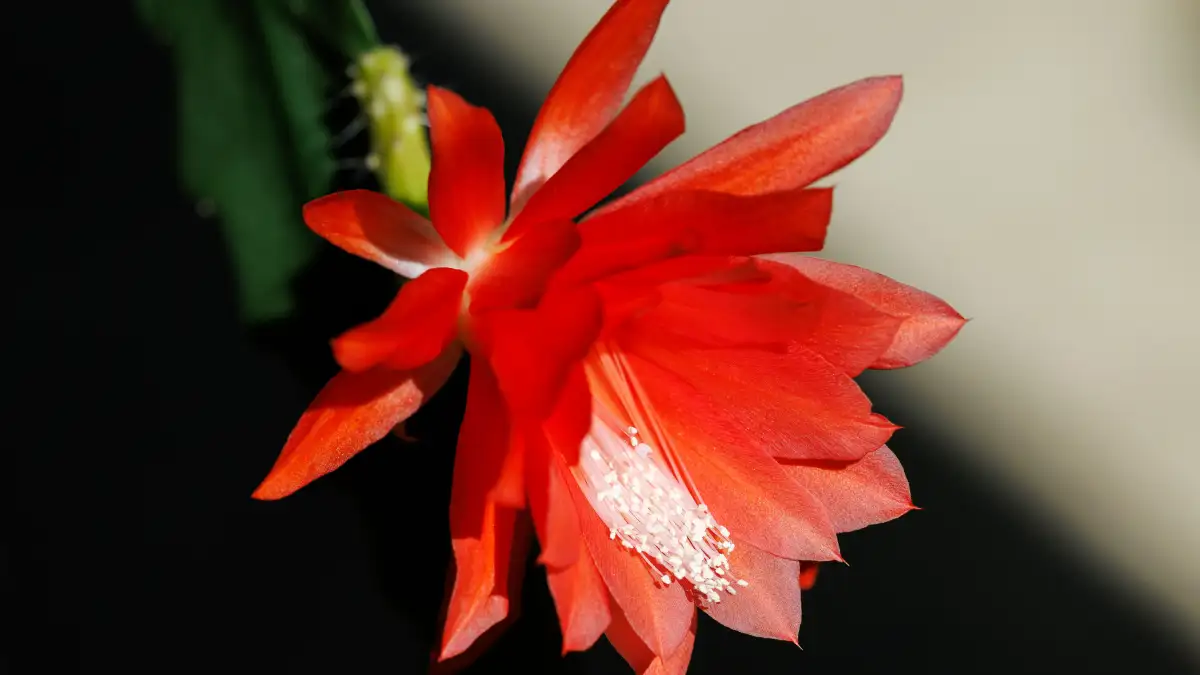
I do the same thing every year in the last week of September. I stand at the kitchen window around dusk, lift the pot to feel how heavy it still is, and try to figure out how many hours of genuine darkness that corner gets once the lamp in the next room is on all evening. Then I move the plant. Not because a calendar told me to, but because I have already watched it stop pushing new segments at the tips, and that stop is the signal the season has turned.
The plant grows in flushes, and flowers come last
Schlumbergera does not grow steadily through the year. It pushes a flush of new segments, rests, pushes another, and only at the end of a good growing season does it convert those newest segments into flower buds. That order matters more than any single care rule, because it means the buds you want in November are decided by what happened in June and July.
I count segments the way some people count tomatoes. In a good summer, a healthy plant adds two or three new joints at the end of most branches. In a flat summer, it adds one, or none, and no amount of autumn fussing will manufacture buds on growth that never happened. If I want to know whether I will get a decent bloom, I look at the plant in mid-August, not in November.
One thing worth sorting out early: a lot of plants sold as Christmas cactus are Thanksgiving cactus hybrids, with pointed, toothy segments rather than rounded ones. Those tend to set buds weeks earlier, and their natural window opens in September rather than October. The phase logic is identical. The dates shift. The plant's own behavior is a better calendar than mine.
What the rest period actually looks like
The weeks after flowering are the easiest to get wrong, because the plant looks tired and the instinct is to feed it and repot it and generally fuss. I do almost the opposite.
Once the last flower collapses, I pick off the spent blooms by hand. Left alone, they cling to the tip, stay damp, and give rot a place to start. Then I take one or two segments off the end of each stem that flowered, pinching at the joint rather than cutting through a segment. That trim does two things: it removes the tired tip, and each cut point usually pushes two new shoots instead of one. More tips next spring means more places for buds next fall. This is the single most direct way to make a plant fuller and flower more heavily the following year.
What I do not do is prune in late summer. Anything I trim after mid-spring is growth that could have carried buds.
Watering during the rest period stays on the same rule as always: soak the pot thoroughly once the top inch of mix is dry, then let it drain completely and never let it sit in the saucer. The rule does not change. The frequency does. A plant with no flowers and short days is drinking far less than it was in July, and if I keep watering at summer frequency I get yellow, mushy segments and a plant that will not recover in time for fall.
Summer is construction, not preparation for flowers
From roughly April through midsummer, the plant is building the wood it will flower on. This is when feeding actually helps. I feed lightly and regularly while new segments are forming, and I stop by late summer or early fall. That stop is deliberate. Nitrogen pushes segment growth, and I need the plant to switch from making stems to making buds. Continuing to feed into autumn keeps it in vegetative mode and can cost me the whole bloom cycle.
I also keep it in bright, indirect light all summer and let it dry a little more between waterings than I would in winter. Roots that stay wet in warm weather are the beginning of most of the trouble people describe as "my cactus is dying for no reason."
The switch happens in early fall, before anything is visible
This is the part that separates a plant that blooms from one that does not. Sometime in September, growth stops. The newest segments firm up and stop elongating. That is my cue.
What the plant needs then is a long, unbroken dark period, roughly in the range of thirteen hours, and cooler nights. Cool is not a vague idea; I am looking for something in the low sixties overnight, and if I can get closer to the mid-fifties without letting the plant get cold and wet, the buds come faster and more evenly. A spare bedroom, an enclosed porch that stays above freezing, or a corner away from the heat register all work.
The interruption is what people miss. A streetlight through an uncovered window, a lamp on a timer in the same room, a television glowing all evening: any of those can break the dark stretch and stall bud set entirely. I pull the shade at dusk and leave it. If I cannot get the room dark, I cover the plant with a box for the night and take it off in the morning, which sounds absurd and works fine.
Watering here is lighter than in summer but not stingy. I still soak when the top inch is dry. I just check less often, because cool air and a slow-growing plant mean the pot stays heavy longer. What I avoid is the combination of cool temperatures and a permanently wet mix, which is the fastest route to root rot in a holiday cactus.
Then the buds arrive, and the rules get strict
Buds show up as small pink nubs at the very tips of the newest segments. When they do, I stop moving the plant. Not slightly stop. Stop.
Bud drop is real and it is almost always mechanical. Turning the pot so the other side faces the window, moving it to a better-looking spot for a dinner party, a cold draft from a door that opens a lot, the furnace kicking on for the first time and blasting warm dry air across it: any of those can strip a plant of every bud in three days. If I need to relocate it, I do it either well before buds form or after they open.
This is also the point where indoor humidity matters. Once the heat comes on, the air in my house drops to the range that makes my lips crack, and the plant notices. I set the pot on a tray of pebbles with water kept below the pebble line, or I group it with a few other plants so they share the moisture they transpire. That stable pocket of humid air around the foliage does not make more buds, but it reduces the stress that makes a plant shed the ones it has.
Once the buds color up and begin to open, the hard part is over. I can bring the plant back to a brighter, warmer room at that point, and it will finish flowering without complaint.
When it doesn't work
Some years nothing happens, and it is usually one of three things. The plant did not get a real dark period, because of evening light in the room. The plant did not build enough new growth over the summer, because it was never fed or was kept too dry or too shaded. Or the plant is young, or was repotted too recently, and simply is not ready. A Christmas cactus is not a plant that blooms on command; it blooms when the conditions have been right for long enough, in the right order.
Repotting waits for the flowers to finish, always. I move a plant into fresh mix every two to three years, in the weeks after it blooms, using a fast-draining cactus mix, and I do not water it heavily for a few days afterward. These are epiphytes under the surface, and they want air around their roots as much as they want moisture. A pot that stays wet is a pot that will not bloom.
If I had to reduce the whole cycle to one habit, it would be this: watch when the plant stops growing, and treat that stop as the beginning of blooming rather than the end of it. Everything after that is just not getting in the way.