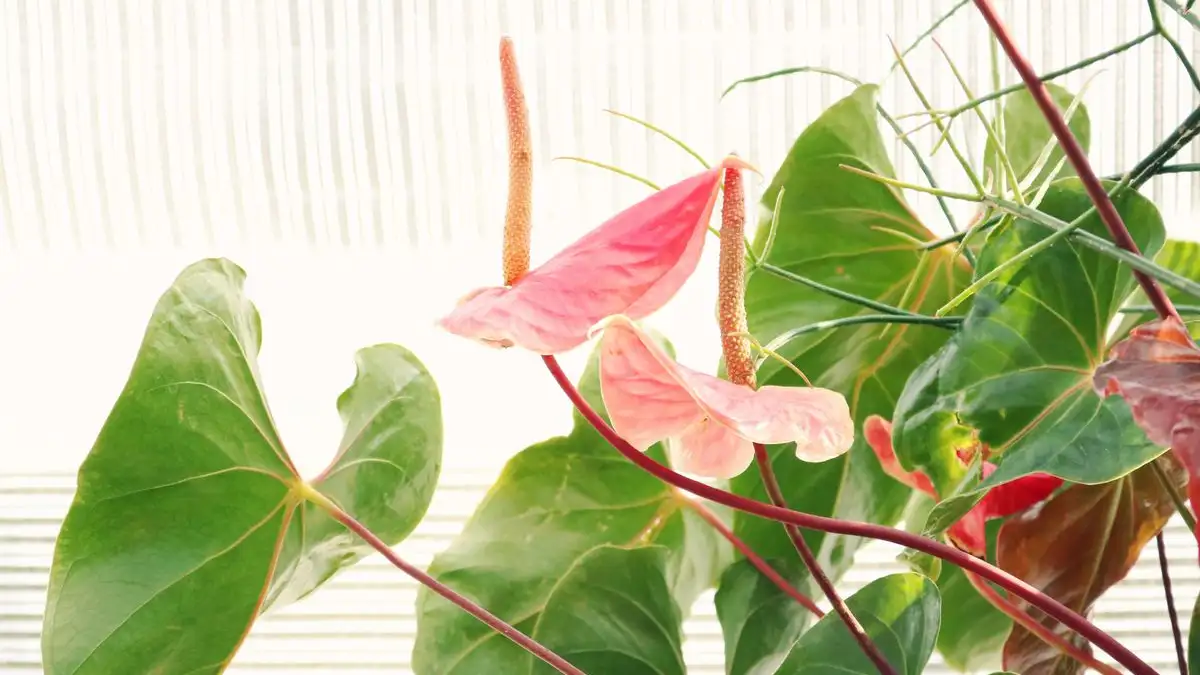
Wait four to six weeks after repotting a flowering houseplant before you feed it again — and if the plant went into fresh mix that already carries compost or slow-release fertilizer, plan for the longer end of that window. Fresh potting mix is not an empty tank. It arrives with a nutrient charge built in, and the roots you disturbed getting the plant into that pot are in no shape to take up fertilizer salts until they have sealed over and started pushing new growth. The plant is not hungry. The plant is busy.
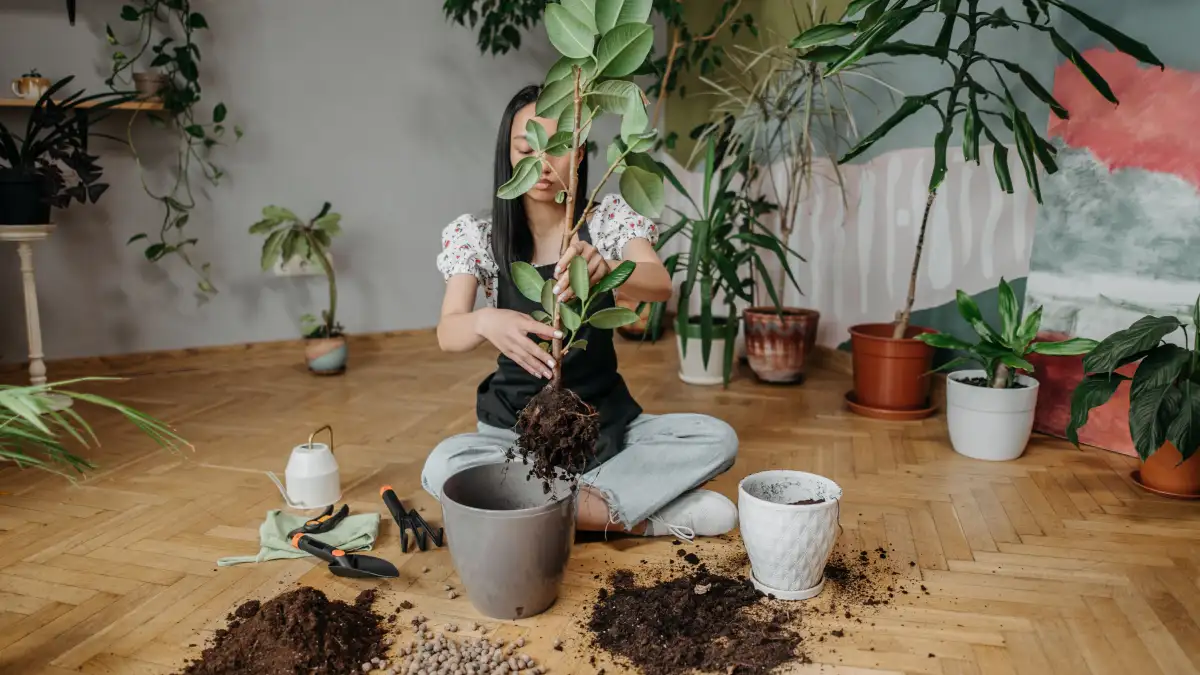
Picture the floor of my kitchen on a Sunday, because that is where this decision actually gets made. Newspaper down, a tray for the crumbs, the pot tipped on its side with one hand cupped over the soil surface so the whole root ball slides out in one piece instead of crumbling. The first thing I notice is never the roots. It is the smell. Damp, earthy, faintly sour. That sourness is the mix already alive — organic matter breaking down, releasing nitrogen on its own schedule whether or not I decide to help. I am not pouring fertilizer onto a blank slate. I am pouring it on top of a meal that is already on the table.
Then I look at the roots, and this is where the wait gets its real justification. Healthy roots are pale and firm. They hold their shape when I run a chopstick around the edge to loosen them. But almost every repot involves some insult: circling roots teased apart, a matted bottom third pulled free, a chunk of the ball that came away with the old pot. Maybe a few roots got trimmed because they were dead and dark. Every one of those spots is an open wound on tissue that absorbs water. Fertilizer salts pull water toward themselves. A healing root tip does not want that. It wants damp mix, stable temperature, and to be left alone.
So the plant drinks plain water until it tells me it is ready for more.
What is already in the bag
Bagged mixes sold for indoor flowering plants are rarely inert. The ones built on compost carry a slow mineralizing supply of nitrogen and other nutrients that becomes available over the first several weeks, as the microbes in the smell go to work. Mixes with slow-release prills — those small round beads you can still see near the surface, sometimes pale yellow, sometimes greenish — are literally designed to dribble out nutrition over weeks to months. If I just opened the bag, that clock started when the mix got wet, not when I bought it.
I have made the mistake of reading the bag, seeing "feeds for three months," and assuming that means the plant needs my help in week two. It does not. It means the plant has been fed since the moment I watered it in.
The first watering is not a feeding
When the repotted plant goes back into its spot, the first watering is a settling watering. It knocks the air pockets out of the mix and brings the root ball into contact with the new medium. There is no nutrition job to do there. If anything, I want that first pass generous and plain, because dry mix around a dry root ball is the fastest way to lose a repot.
After that, I watch the pot, not the calendar. A plant that has settled in will start drinking normally again within a week or two — the pot feels lighter on schedule, and the surface mix dries at the pace it used to. That resumption of drinking is the first real sign that roots are functioning. Until it happens, feeding is pointless, because there is nothing downstream to receive it.
The calendar is a bad trigger anyway. A plant on a cool winter windowsill is running slowly, and its six weeks may stretch to eight or nine. A plant in bright summer light with warm roots underneath it may be ready sooner. What I trust is the plant's own output, not the number of days since potting day.
The signal that says resume
I look for active new growth, and I mean the specific kind, not just "it looks happier." A new leaf that has fully unfurled and gone matte — losing the shine and softness of a young leaf — is a leaf that is paying its own bills. New growth that has hardened enough to hold its shape when I brush it. A new crown or a new shoot on a plant that grows that way. When I see that, I mix fertilizer at a quarter to half the label strength and start there, not at full rate. The first two or three feeds after a repot are the gentlest ones, and I would rather underfeed for a month than scorch fresh roots and spend the next season watching a plant sit still.
Always onto damp mix. Never onto a bone-dry root ball. Dry mix plus fertilizer salts is exactly the combination that produces those crisp brown leaf edges and the white crust that shows up on the rim of a terracotta pot.
Why the wait matters for reblooming specifically
This is the part that generic advice usually skips. Repotting a flowering plant is almost always an investment in the next bloom cycle, not the current one. If the plant is carrying buds when it goes into fresh mix, those buds were set under the old conditions, and no feeding will rescue the ones that drop. What feeding early can do is push leafy growth at the expense of flowers — nitrogen drives shoots, and a plant that has just been handed a nitrogen surplus will happily spend it on leaves and put the bloom on hold. On a plant I repotted hoping for a rebloom, that is the exact trade I do not want.
There is a harder case too. If the plant went into new mix because the roots were rotting, or if the mix stays soggy because the pot is too big or the room is too dark, then fertilizer is not just useless — it is another stress on tissue that is already failing. Salts around damaged roots in a wet, airless medium make a bad situation worse and push rebloom further out. Plain water, better light, and a smaller pot solve that problem. Fertilizer does not.
The orchid exception, and other long waits
Orchids in fresh bark are their own category. Fresh bark gives a plant almost nothing immediately, and the organisms breaking that bark down actually compete for nitrogen while they do it. So an orchid can look stable for several weeks after a repot and then quietly stall. The wait is longer than four to six weeks, and when feeding resumes it starts at a fraction of full strength, applied to a thoroughly wet root zone. Bark-based mixes also change character as they age, which is a separate reason orchid feeding schedules get reset after every repot rather than continued on the old rhythm.
The same logic stretches for any plant repotted into a big jump in pot size, or into a mix that is much more moisture-retentive than the one it came from. More mix around the roots means more slow-release nutrition and slower drying, which means the wait gets longer, not shorter.
When it is fine to feed sooner
If I potted up a root-bound plant into the same style of mix, one pot size larger, with almost no root disturbance, and the mix has no slow-release prills in it, then four weeks is a reasonable floor and the plant will usually tell me it is ready before that. Frost-free windows and warm, bright rooms shorten the wait. Cool, dim rooms lengthen it. Reused, exhausted mix that has been in a pot for two years gives the plant nothing, so the four-to-six-week figure is about root healing alone there.
What I do not do is treat the wait as a punishment the plant has to endure. It is a head start. The mix is feeding it, the roots are stitching themselves back together, and the plant's next move — a new leaf, a new spike, a bud that holds — is the only opinion that matters about whether it is time.