You can tell fertilizer burn from a nutrient deficiency without guessing, and you do it by reading three things in a fixed order: where on the plant the damage showed up first, what the soil surface looks like, and how many days passed between the feeding and the first symptom. Burn and salt stress announce themselves as brown, crisp tips and margins on the oldest, most exposed leaves, often with a pale crust at the soil line. A real deficiency follows a nutrient-specific pattern instead, moving either from the oldest leaves upward or from the newest leaves outward, and it arrives over weeks rather than days. When the two are tangled together, a plain-water flush is the test that separates them, because it strips the accumulated salts and then lets the new growth tell you the truth in about two to three weeks.
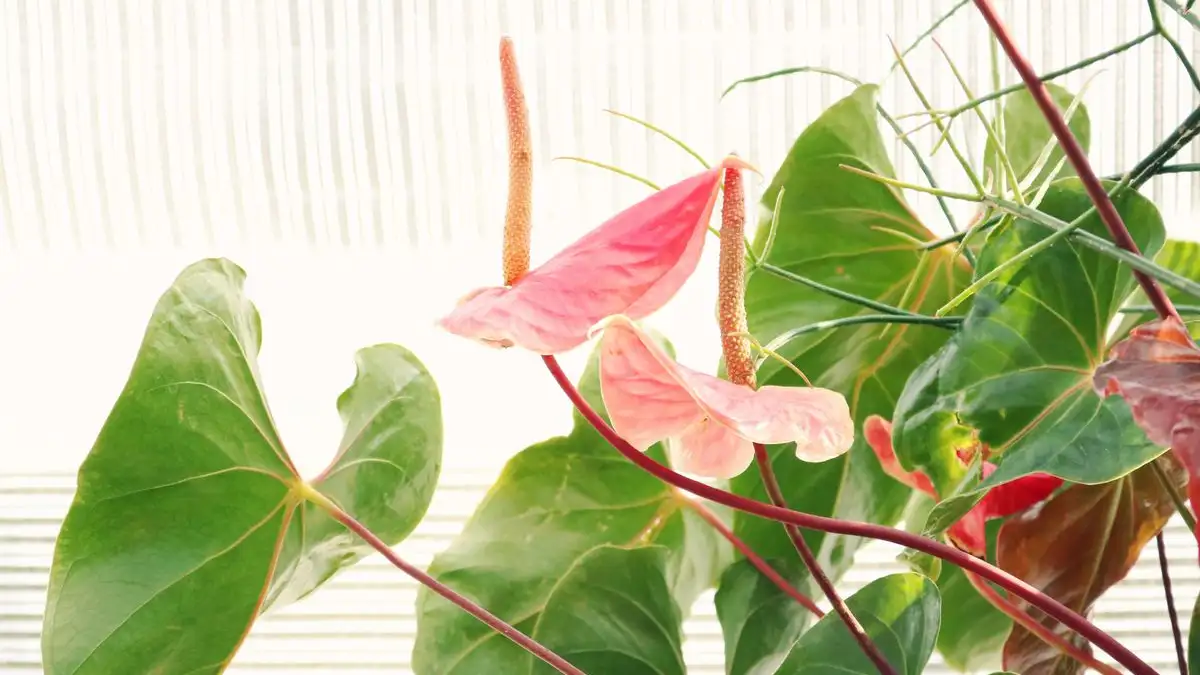
The plant that drilled this into me is a hibiscus on the south sill of my kitchen, and I have stood over it more times than I want to admit, holding one bad leaf between my thumb and forefinger, deciding whether to reach for the bottle or the watering can. The leaf does not care what I want it to be. That is the whole problem with guessing.
Start with where the damage sits
Hold the leaf up to the window with the light behind it, and look at the tissue, not at the overall color of the plant.
If the brown is on the tips and the margins, hard and crisp, with a thin yellow band between the dead tissue and the green, that is chemistry in the soil. Salts ride the transpiration stream out to the leaf edges and tips, and that is where the water leaves and the salt stays behind. The oldest and largest leaves, the ones doing the most work, take the worst of it. Mix a strong batch and pour it into a dry pot and I can get crispy margins on half a plant inside a week.
Then look at whether the new growth is affected too. A deficiency almost never hits the newest leaves and the oldest leaves with the identical symptom at the same time. Burn can. If every leaf on the plant wears the same brown edge, stop thinking about what the plant is missing and start thinking about what is sitting in the pot.
Now turn it around. If the yellow is soft and the leaf is still pliable, and the veins stay green while the space between them goes pale, that is a different animal. Mobile nutrients, the ones a plant can pull out of old tissue and send to new growth, quit on the oldest leaves first. Nitrogen gives you a uniform pale wash across the lower canopy, and those leaves eventually drop. Magnesium gives you that interveinal yellowing on older leaves with a green arrowhead of tissue along the midrib. The immobile nutrients, iron and calcium and boron among them, cannot be moved, so the newest leaves yellow and distort first while the old ones stay green. Which end of the plant went first is the single most useful thing the plant tells me.
Then look at the soil surface
Run your eye around the rim of the pot, across the surface between the stems, and down the outside wall of a terracotta pot. Then lift the pot and look at the saucer.
A pale, gritty, crystalline ring is salt that the water left behind when it evaporated. On terracotta it shows up as a white bloom on the outside wall. In plastic it collects at the rim and in the saucer ring. Scratch the top quarter inch of mix with a fork and see whether it has gone matted and crusty. That crust is the receipt for every feeding you did not flush out.
Two things I got wrong for years. Not every white fuzz on the surface is salt. If it is fluffy and webby and wipes away easily, it is mold growing on wet organic mix. A salt crust is gritty, sits in the mineral portion of the mix, and comes back after you water. The second thing is that tap water is a contributor. In a hard-water area, the calcium and bicarbonate in the water alone can leave a crust and push the pH of the mix up over a season, which is a slow and quiet problem and has nothing to do with how much you fed.
Count the days
This is the part people skip, and it is usually the fastest answer.
Think back. When did the first brown tip show up relative to the last time you fed? If the damage is inside a week or two of a feeding, especially a feeding you mixed a little strong, or poured into a dry pot, or gave to a plant that was already struggling, overfertilization is the better bet. It is nearly always the better bet.
A true deficiency is a slow argument. It builds across a month or more of growth, and it tracks with light and warmth and the plant actually producing new tissue. If the plant has been sitting still for six weeks and nothing else has changed and then the leaves went yellow, that is not a nutrient shortage either.
I write the date on a scrap of tape and stick it to the pot whenever I feed. It sounds fussy until the day you are standing there trying to remember whether the leaf looked like that before or after.
A flowering plant will often tell you with its buds instead
Keep an eye on the buds, because a stressed or overfed flowering plant frequently drops them before any leaf shows a thing. The bud yellows at the base, the stem goes limp, and it comes off clean in your hand. When that happens and I know I fed heavily in the last couple of weeks, I skip the next two feedings entirely. If the leaves are fine and the buds are dropping, the leaves are not the evidence. Watch the calendar and the buds together.
The flush is the test, and it is also the fix
If the damage sits on the tips and margins, there is any crust at all, and the mix is not soaking wet, flush it.
Take the pot to the sink or the tub. Run room-temperature water through the mix slowly, a few passes, until roughly two to three times the volume of the pot has gone out the drainage holes. Let it drain completely. Do not let it stand in the saucer. That is the whole procedure. Then do nothing for two to three weeks. No feed, no extra anything.
What you are doing is clearing the salt out of the root zone and giving the plant a clean slate to answer from. Then read the new growth and only the new growth. Burnt margins do not heal. The old leaves are a record of what already happened. A leaf that comes in flat, evenly colored, and the right size for the plant, with no feed given, tells you the plant was never starving. It was drowning in salts.
If the yellowing keeps advancing after the flush, and the newest leaves keep coming in pale or small, then you flushed out a real shortage along with the salts, and now you feed. Start at half the labeled strength and go slow. Two or three weeks between feedings until the plant answers.
I want to be honest about the limits here. The flush test costs you two to three weeks, which feels like forever when it is a plant you love. Some plants sulk after a heavy flush and drop a few of the damaged leaves anyway. And flushing only removes what is dissolved. If slow-release prills are sitting in the mix, they keep releasing on their own schedule and the flush does not touch them. In that case I pick out what I can see on the surface or repot into fresh mix.
The one that fools everybody
The case that sends people in circles is a plant that is overfed and starved at the same time.
When the soluble salt concentration in the root zone gets high enough, water and certain nutrients stop moving into the roots properly. The plant responds by looking hungry, so you feed more, and the symptoms get worse and start to look exactly like a deficiency. Yellow between the veins on the new growth. Brown edges on the old. Both at once, which should be your tell, because a genuine shortage rarely does both.
If deficiency symptoms showed up right after you decided to feed more often, that is the answer. The fix is not more fertilizer. It is the flush.
Check the roots before you do anything
One thing comes before the flush.
If the mix has been wet for days, the pot feels heavy, and the yellowing leaves are limp and soft instead of crisp, you are probably looking at a root problem rather than a fertilizer problem, and adding more water will make it worse. Slide the plant out of the pot and look. Firm roots that are pale and hold their shape are alive. Roots that are brown and slide off between your fingers when you pull gently are not, and no amount of feeding brings those back. Fresh mix, a pot only as large as the root ball needs, and a lighter hand on the water is the move there.
How I run it, start to finish
Look at where the damage started, newest leaves or oldest. Look at the soil surface and the saucer for a crust. Count the days since the last feeding. Feel the mix and the weight of the pot.
If it is wet, check the roots first. If it is not wet and there is a crust, flush and wait. If the new growth comes in clean with no feed, you had a salt problem. If it stalls and keeps yellowing, you had a shortage, and you start feeding at half strength.
Change one thing at a time. Feeding and flushing in the same week destroys the only evidence you have.
And the leaf in your hand, the one with the crisp brown edge, will not get better no matter what you do. Stop watching it. Watch the one that unfurls next.