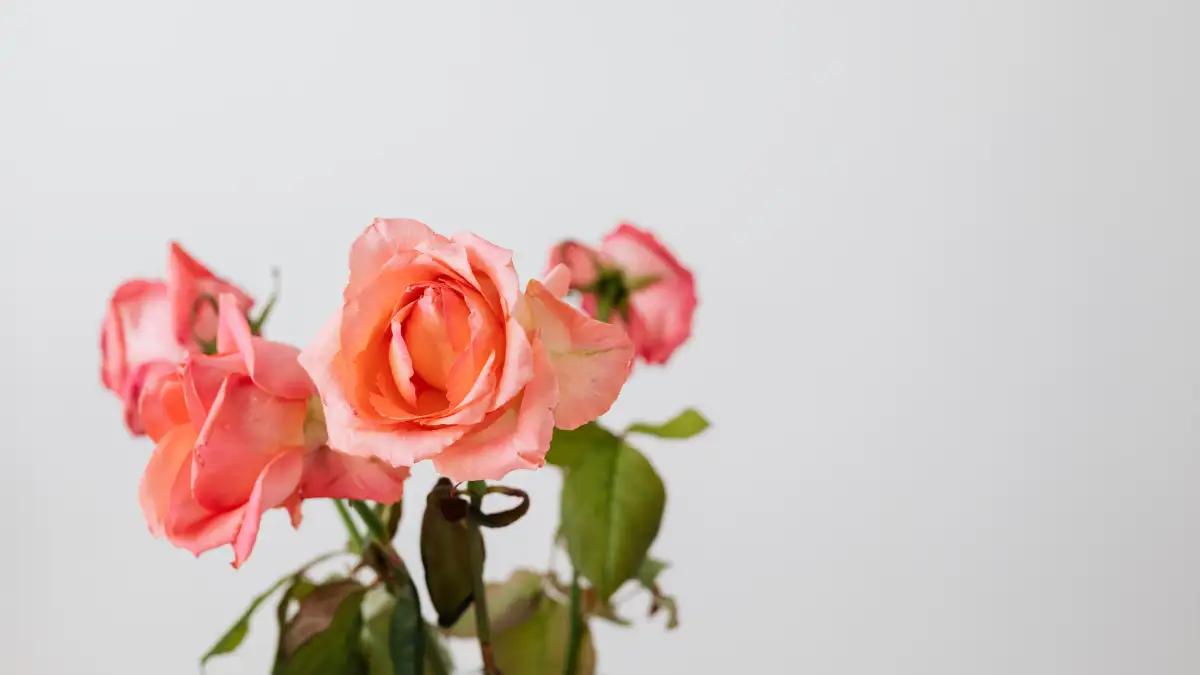
A bud that yellows, shrivels at its base, and drops before it opens has almost certainly been lost to the air around it rather than to the watering can. Dry moving air, a cold draft, or ethylene gas desiccates the pedicel — the short stalk that feeds each individual bud — and once that connection fails, the bud is finished days before anything looks wrong. A flower that opened first and then faded is a different failure with a different fix, and lumping the two together is how a plant that was never thirsty ends up sitting in wet mix.
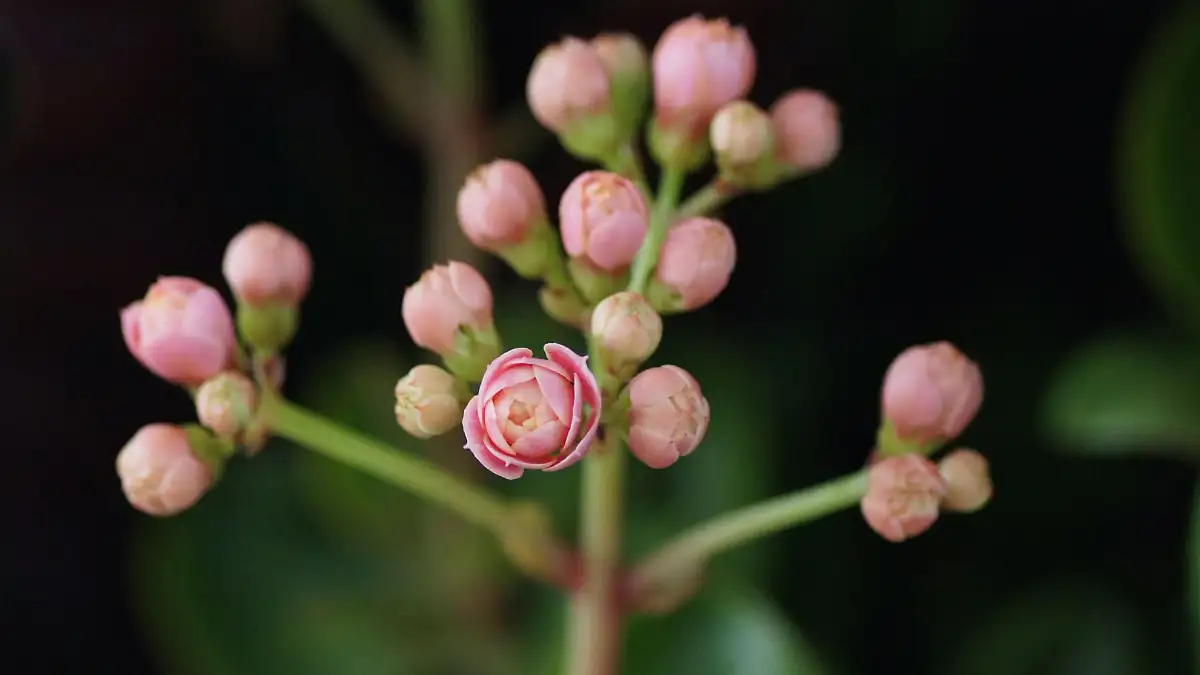
I found three of them on the sill this morning. No stem attached. Yellow at the tip, pinched brown right where the pedicel had been, each one small enough to sit on a fingernail. Above them the plant looked like nothing had happened: leaves firm and flat, no wrinkles, roots silver-green through the clear inner pot, the bark still faintly damp from watering four days earlier. Every check I'd normally run came back clean. Nothing was wrong down there. The failure was eight inches up.
Put the back of your hand between that glass and the spike. In January, on a single-pane window, that gap is a different climate from the rest of the room. Cold enough to feel like a draft even when the air is dead still, because the glass chills the air against it and that air slides down. The furnace register under the sill kicks on and off all day, and every cycle pulls a little more moisture out of that band of air. A bud sitting in it loses water through its surface faster than a plant with cool roots and modest winter light can push water back up. Something has to give, and the something is always the thinnest pipe in the system.
The pedicel is the whole story
A root has bulk. It can lose water and still function, and it can store a little and hand it back. A pedicel can't do either. It's a millimeter-wide bundle of vascular tissue with no reserves worth mentioning, and it is the only route between the plant and the bud. When the air immediately around it pulls harder than the plant can supply, the tissue at the joint collapses first. That's the pinch you feel if you roll a blasted bud between your fingers — hard and brown at the base, slightly soft above it. Then the abscission layer does its quiet work and the bud lets go. Usually in the morning. Usually onto the sill. Usually without a sound.
That sequence is why the pot can be perfect and the buds can still blast. Roots fine, medium fine, watering fine, and none of it matters, because the plant isn't the part that failed. The air right around the pedicel is.
Buds that dropped are not flowers that faded
Worth separating these two, because I've watched people chase the wrong one for a month.
A blasted bud never opens. It goes yellow or tan, sometimes hollow-feeling, and it drops while still closed. That is a bud stage failure, and by the time the color turns, it's already over. Nothing you do — misting, watering, moving it into the bathroom for the humidity — reopens it. The bud is gone.
A flower that opened and then faded is a different case entirely. If it opened normally, lasted a few days or a couple of weeks, and then went limp or crisp at the edges, the pedicel did its job. What you're looking at is either the natural end of that bloom's life, or a root system that can't support the load it's carrying, or a plant reading the current light and temperature as not worth the investment. That one you can sometimes act on.
I keep those two categories separate because the first response is stabilize the air and touch nothing, and the second response is go look at the roots. They point in opposite directions, and the plant doesn't tell you which one you're in unless you look at the whole thing.
Ethylene doesn't care how healthy the plant is
Here's the part that catches people who've already solved the temperature problem and still lose buds.
Ethylene is a gas. It's given off by ripening fruit, by cigarette smoke, and by exhaust from gas appliances, and in a closed room with the windows shut it accumulates. Orchids and a lot of other flowering houseplants are sensitive enough that the response is bud drop, at concentrations you cannot smell and cannot see. A bowl of apples or bananas three feet from a spiking plant is not a neutral neighbor in February. Same story with a gas stove or a furnace that isn't drafting cleanly in a sealed-up house.
Placement and a little air exchange are the levers. Fruit somewhere else. A door cracked for part of the day. If the plant lives near a gas appliance, that's worth knowing about before the next spike comes up.
The bud stage is a hands-off stage
Once the buds start to swell, the plant has committed. That is not the week to repot it, not the week to rotate it toward the light, and especially not the week to carry it into another room because you're having people over.
I learned that one the expensive way. A plant that had been sitting in the same spot for months, spikes heavy with fat green buds, moved about eight feet to a brighter window for a dinner party. Four days later half the buds were on the floor. Nothing else changed. Same watering, same pot, same room temperature — a different window, a different microclimate, and a plant that read the change as a reason to cut its losses.
So the rule I actually follow: from the moment a spike starts setting buds until the last flower drops, the plant stays where it is. If it needs water, the inner pot comes out, drains in the sink, and goes back into the same cachepot, in the same orientation, in the same spot. That's a twenty-minute errand, not a move. It's relocation that blasts buds, not a trip to the sink.
What I do instead is decide the spot before the spike develops. Late summer or early fall, while a plant is only growing leaves and roots, that's when I work out where it will spend the winter. Away from the glass. Away from the register. Out of the path of the door, not under a ceiling vent, not on top of the refrigerator, not beside the fruit bowl. By the time the spike is up, the decision is already made and I don't revise it.
What actually helps, and how much
Grouping plants together helps a little. A cluster of pots holds marginally more moisture in the air around them than one plant alone does. A pebble tray under the pot helps a little too, mostly in the first inch or two of air — which happens to be exactly where the buds are. Neither is dramatic. What moves the needle more is removing the moving air: pulling the pot back from the glass, deflecting the register, closing off the hallway.
A thermometer placed where the buds actually are tells you more than the wall thermostat does. I've measured four or five degrees of difference between a sill surface and the interior wall of the same room in January, and the plant only cares about the one it's sitting in.
And the honest limitation: if buds are blasting on a plant that also has wrinkled, leathery leaves and roots that are brown and hollow when you squeeze them, the air is not your problem. That plant lost its buds because it couldn't supply them, and humidity won't rebuild a root system. You can't read bud drop from the buds alone. You have to look at the whole plant.
A blasted bud will not come back. That's the part nobody wants to hear. What you get is the next spike — and if you've sorted out the draft, the dry moving air, and the ethylene sources before that spike sets buds, you get the flowers.