A temperature drop that fails to trigger a Phalaenopsis spike is almost always one of six specific failures rather than bad luck: the drop was too shallow, it was too short, the plant was too young, the light was too low, the roots were compromised, or warm air leaked back into the room on some of those cool nights and cancelled the signal. The order matters, because the first four cost nothing but a thermometer reading and a hard look at the leaves, while the last two mean pulling the plant out of its pot and rethinking the room. Most growers, myself included, start with the wrong one.
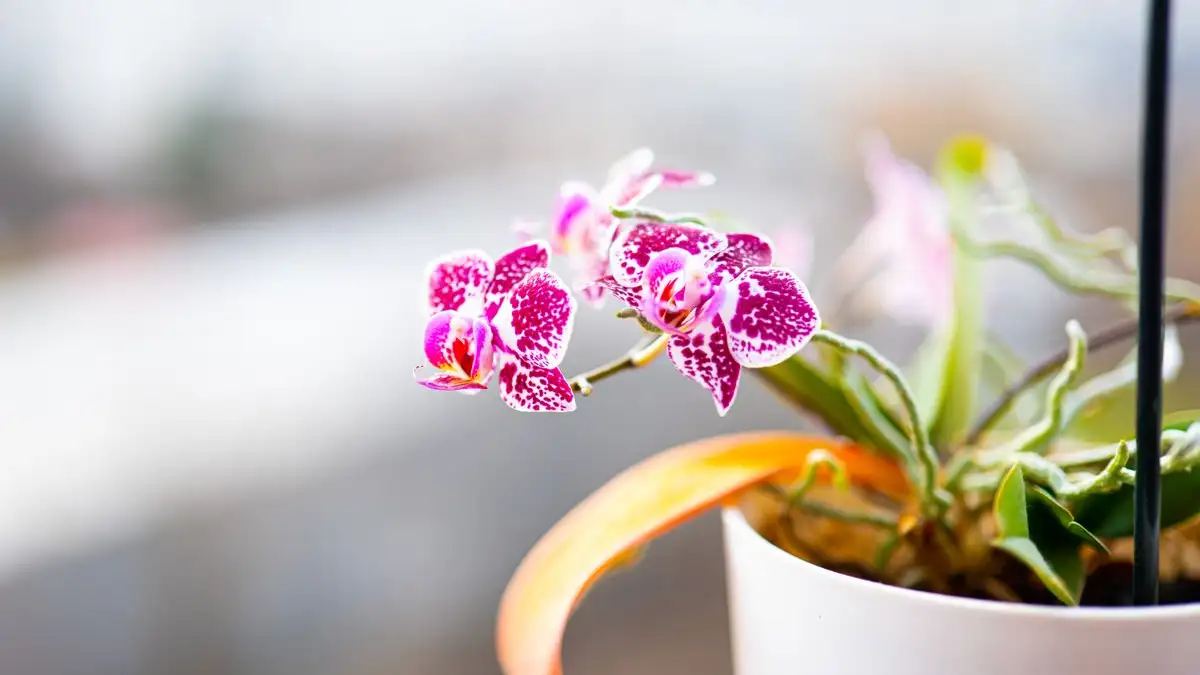
The season I lost, I was certain I had done everything right. It was late October. I had moved three Phalaenopsis to the sunroom, set the house thermostat down to 64 at night, and cracked the window a half inch. By the end of November, one plant had a nub in the leaf axil and two had nothing. I blamed the hybrid. Then I did the thing I should have done in week one: I put a cheap min/max thermometer on the windowsill, right behind the leaves, and left it there for seven nights. The lowest reading was 66°F. The hallway thermostat was honest. The windowsill was not.
That gap between what the room is doing and what the plant is experiencing is where most failed cool periods live. So here is how I work through it now, in order.
First, find out what the drop actually was
Get a thermometer with a min/max memory and put it at leaf height, not on the wall, not on the shelf across the room, not near the floor where cold air pools. Leave it overnight. Read the minimum in the morning. That number is the only one that counts.
What you want is a night temperature that lands between 55 and 60°F with daytime temperatures running 10 to 15 degrees above that. A drop from 72 to 68 is not a drop. It is a cooler evening. Many people turn the thermostat down two degrees, feel a chill, and assume the message was delivered.
Where the thermometer sits matters more than people expect. A windowsill behind glass in October can run several degrees colder than the middle of the room — or several degrees warmer, if there is a heat register under the sill. I have had a plant sitting in a genuinely cold spot and a plant sitting six inches away in a warm one. Same room, same thermostat, different outcomes.
Two weeks is a floor, not a target
The cool signal needs to hold for at least two weeks of consecutive nights. Consecutive is the word that gets skipped. Fourteen cool nights spread across a month with warm breaks in between is not the same treatment, and in my experience one warm interruption is enough to undo the progress. The interrupting night is usually something ordinary — a dinner at the house, a cold snap that makes you bump the heat back up, a window you close because you are going to bed and it feels too cold in there.
So I stopped aiming for exactly fourteen nights and started aiming for three to four weeks, uninterrupted. If I cannot guarantee the window, I plan the cool period for a stretch when I know the house will be quiet and the weather will cooperate. That single change did more for my spike rate than any fertilizer or repotting decision.
Count the leaves before you count the spike
A Phalaenopsis that is not old enough will not spike no matter how perfectly you cool it. Look for at least four to six leaves on a plant that has been growing for two to three years. If yours has three leaves and came out of a seedling pot last spring, it is not stubborn. It is young, and it is doing exactly what a young orchid should do, which is build leaves.
The trap here is a plant that looks big because the leaves are long. Length is not maturity. Count them from the crown down, and count the ones that are full-sized, not the two little ones still unfurling.
Turn the plant out and look at the roots
The roots decide whether the rest of this is even possible.
Tip the plant out of its pot, or look through a clear pot if you grow in one. Healthy roots are firm and plump, and they shift between silvery and green depending on how recently they were watered. Mushy, brown, hollow, or black roots mean rot, and a plant fighting rot is spending everything it has on staying alive. Bloom is the first thing it drops.
Two things I got wrong for years. First, I judged the root system by the roots I could see around the edges and on the surface, which are often the healthiest ones. The roots in the middle of the pot, buried in broken-down bark that stays wet for days, are the ones that tell you the truth. Second, I treated a slightly soft root as fine. Soft is not fine. Firm is fine.
If the medium has gone sour and the center roots are gone, the fix is a repot into fresh bark and a season off from any blooming ambitions. Cool the plant all you want — it cannot build a flower spike on a root system that is failing.
Then check the light, because cool nights cannot fix a dark corner
Low light is one of the most common reasons a plant skips a spike even when the temperature treatment looked correct. The spike initiates near the crown, in the leaf axil, and that process needs energy coming in from above before it needs a signal coming in from the thermometer.
The signs of a light-starved Phalaenopsis are hard to miss once you know them: long, floppy, dark green leaves, no new leaf in months, a plant that leans toward whatever window it can find. An east window with a few hours of direct morning sun, or a bright filtered south or west exposure, is usually enough. A north-facing shelf in a dim room is not, and no amount of cool air will compensate.
Ask what the plant spent its summer on
If your orchid bloomed in June, or pushed three big new leaves across the summer, it may simply not have anything left in the tank. Blooming costs a plant real reserves, and so does heavy vegetative growth. The cool period is a nudge, not fuel. You can deliver a perfect temperature signal to an exhausted plant and get nothing back, because there is nothing there to convert.
That plant usually needs a rest cycle — normal light, normal water, normal feeding, no cool treatment — before it will respond to anything. I have had orchids skip a year entirely and spike the next one with no change to what I did, and I think this is why.
Watch for the warm air that quietly cancels the signal
This is the one that hides. A cool night means the whole night, at the plant, not just the hours when the heat is off.
Things that break the stretch: a radiator or baseboard heater under the windowsill that cycles on at 3 a.m., a forced-air vent pointed at the shelf, a door that gets opened to a warm hallway, a sunny November afternoon that pushes the leaf surface up twenty degrees before the evening drop begins. Your min/max thermometer records the maximum too, so read both numbers. If the minimum drifted up to 68 on the nights the heat kicked on, the cool period did not happen, even though it felt cold to you standing there in a sweater.
What I change next cycle, in order
Run the checks in this sequence, because it goes from cheapest to most disruptive:
Roots first. Healthy, firm, plump, no soft tissue. If not, repot and wait a season.
Light second. Bright, with some direct sun, and evidence of recent leaf growth.
Maturity third. Four to six full leaves minimum.
Temperature depth fourth. A verified 55 to 60°F minimum at leaf height.
Duration fifth. Consecutive nights, no interruptions.
Stability last. No warm spikes during the cool window.
If all of those check out and you still got no spike, extend the cool period to four to six weeks next time rather than changing anything else. That is the standard next move, and it is a real one — some plants need the longer window to commit.
The part nobody likes hearing
It depends, and sometimes the answer is that the plant simply did not bloom this year. Mass-market hybrids often spike in rooms that barely cool at all, which is why the advice you read is so inconsistent. Some species-influenced plants want the full treatment and a long window. And a healthy orchid with good roots and good light can still skip a season for reasons that have nothing to do with anything you measured. That is not a verdict on your care. It is one data point, and you get another cycle next year.
