Six weeks of long nights — a dated start, thirteen to sixteen hours of uninterrupted darkness every night, and a real drop in night temperature — is what pulls a Christmas or Thanksgiving cactus back into flower indoors. The darkness count and the cool nights are one protocol, not two options. The reason people try this and report that it did nothing is almost never a mistake in counting the weeks; it is that the plant spent those weeks in a room holding steady in the low 70s, and no amount of darkness overrides a warm room.
I keep the start date on a strip of masking tape stuck to the rim of the pot, and I add one pencil tick for every night that passes. Six weeks is 42 ticks. That sounds fussy until you have done what I did the first year — cut the days, waited, watched nothing happen, and realized somewhere around week five that I had been flipping the kitchen light on at ten every night, right beside the plant, for the entire dark period.
So now the light-leak check comes first. I turn off every light in the room, stand where the plant sits, and wait a full minute for my eyes to adjust. You will be surprised what shows up: the glow under the door, the standby light on a power strip, a neighbor's porch light coming in low through the blinds. Any of those landing in the middle of a dark stretch breaks that night, and enough broken nights and you have effectively run a normal schedule.
Start on a date you chose, not a date that happened to arrive
Holiday cacti are not triggered by fall showing up outside. Indoors, they are triggered by the schedule you hand them. If you wait for the days to shorten on their own through a window, you are handing the timing to your window, your latitude, and whether anyone in the house turns on a lamp at seven.
So I count backwards. Six to eight weeks of long nights, plus another two weeks or so for buds to size up and open, means roughly eight to ten weeks from the first dark night to flowers. For a Christmas bloom, that puts the start in the first half of October. For Thanksgiving, mid-September. I write that date on the tape before I begin. A start date you can point to is the difference between a protocol and a hope.
What a long night actually is
Thirteen to sixteen hours of darkness, counted as darkness rather than as "the lights are off in this room." Fourteen is a comfortable middle: lights off at six in the evening, back on at eight in the morning. That is a schedule a person with a job can actually keep.
The plant still needs a real day. Eight to eleven hours of genuinely bright light — under a timer on a grow light, or in a good bright window — and then a long, unbroken night. My usual setup is a plain cardboard box turned upside down over the pot, on at six and off at eight, with the plant in a room that is actually cool. It is inelegant and it works, because the box enforces the darkness instead of trusting the household to remember.
Do not park the plant in a dark closet around the clock. A cool closet is fine if the plant comes out into light for its short day. Twenty-four-hour darkness does not speed up bud set; it just weakens the plant, and a weakened plant drops buds.
The number that has to travel with the darkness
Night temperature. This is the half that gets skipped, and skipping it is why a perfectly counted six weeks can end with nothing.
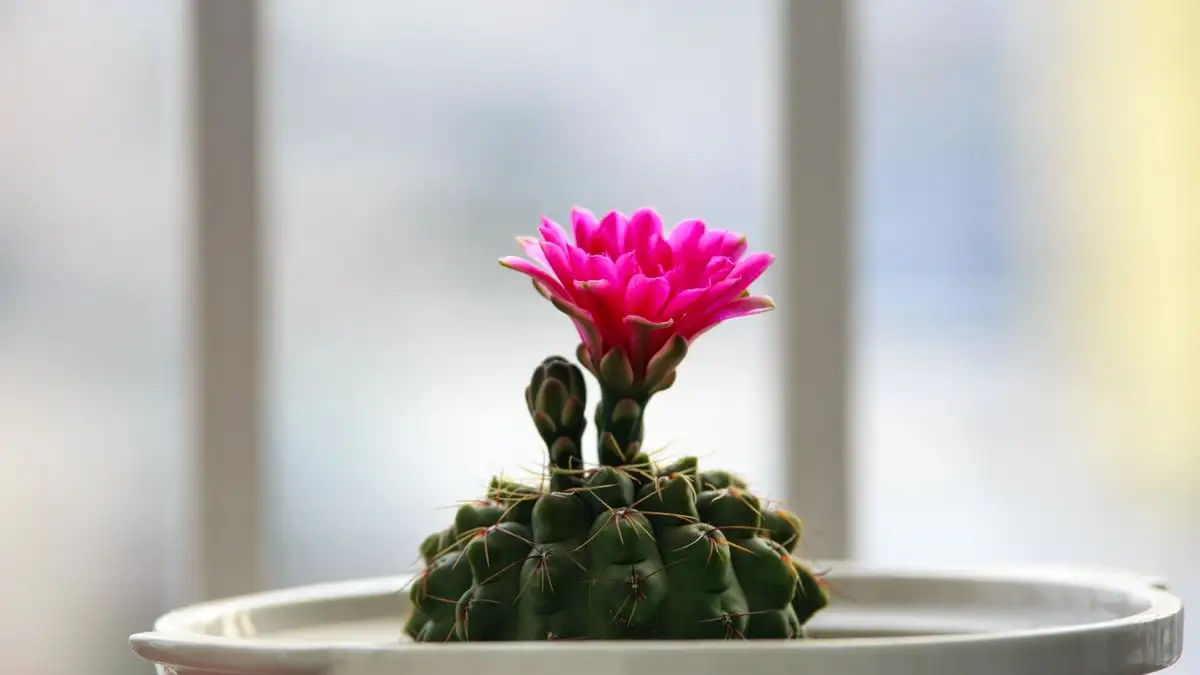
Holiday cacti (Schlumbergera — Thanksgiving and Christmas cactus). Long nights of thirteen to sixteen hours for six to eight weeks, with nights somewhere in the 50s to low 60s Fahrenheit. Not a draft and not a January windowsill — a consistent cool night. The combination is the trigger. I have watched the same plant sit through eight flawless long nights a week for two months in a room that stayed above the high 60s at night and do absolutely nothing.
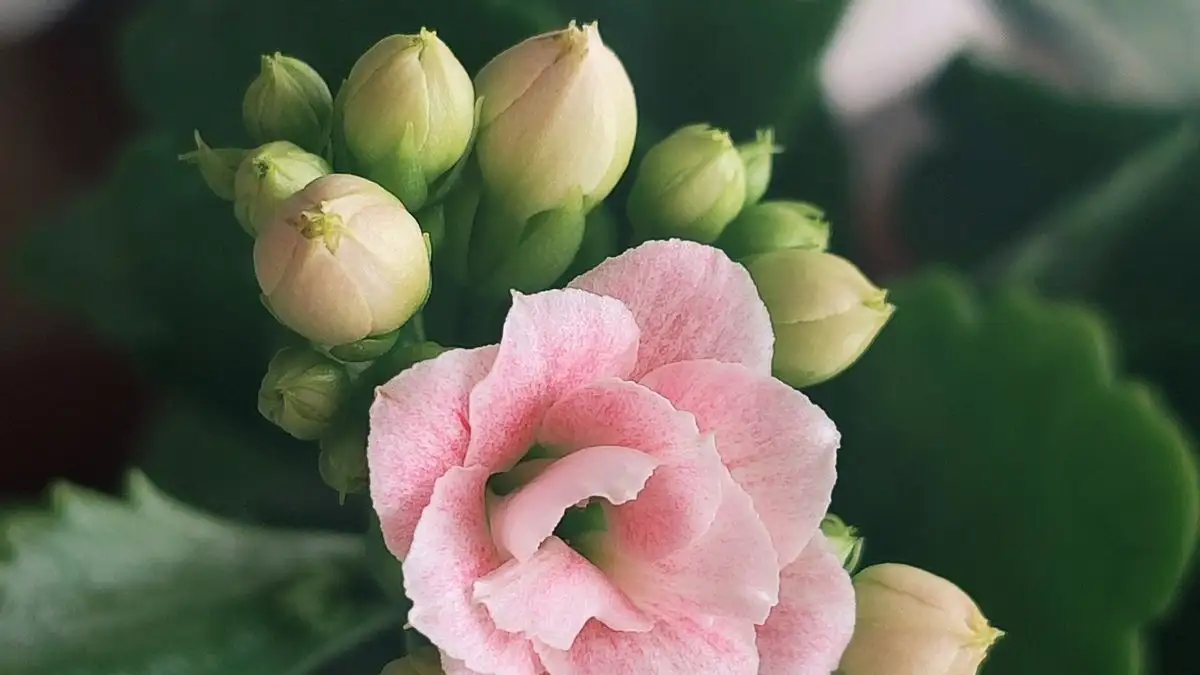
Kalanchoe. Same photoperiod logic — a stretch of long nights to set buds — but this one wants those shortened daylight hours bright. A kalanchoe that gets its long nights in a dim corner will set buds and then stretch and flop instead of flowering well. Cool nights help; a bright short day finishes the job.
Phalaenopsis. Here the emphasis flips, and this is exactly why I never reduce light alone and call it a protocol. A phalaenopsis rebloom is driven mainly by a night temperature drop of roughly 10 to 15 degrees Fahrenheit held for several weeks. A house running 72 during the day and 58 at night will do it, and shortening the days is not required. Different plants weight the two variables differently. Manipulate only one of them and you will be right occasionally and confused the rest of the time.
Dendrobium nobile types. These want a cool, dry winter rest — reduced water, no fertilizer, nights down around 45 to 55 — before they will set flowers on the new canes. Cut the water before the nights turn cool, not after. Wet roots plus cool nights is how you lose a cane to rot while waiting for flowers that were never coming.
Getting the cool in a heated American house in October is less mysterious than it sounds. I have used the thermostat setback, a spare north bedroom with the register closed, an unfinished basement room, and a three-season porch that stays above 45. Whatever room you pick, a cheap min-max thermometer is the only tool that really matters, because "it felt cool in there" is not data. Leave it beside the pot overnight and read the low in the morning. That number is the second variable you actually ran, regardless of what you intended.
Keep the pot away from heat registers, baseboard heat, radiators, and the top of the refrigerator. A spot that swings fifteen degrees when the furnace kicks on at six in the morning is not a cool room. It is a warm room with cool gaps, and the plant reads the warm.
The end date is not optional
Long nights do the triggering. They do not do the finishing.
Once you can see buds — on a holiday cactus, the tiny pink or red points at the tips of the last segments — stop the protocol. Take the box off, or move the plant back to a normal day length of twelve to fourteen hours. Now it needs to run photosynthesis to build those flowers, and holding it in long nights past that point can push it toward bud abortion. Same idea with kalanchoe: back to normal days, and make the light as bright as you can give it.
Then leave it alone. Buds that set and then drop are almost always answering a change — moved to a different window, rotated, repotted, watered differently, caught by a cold draft. I water normally but carefully, and I do not repot anything with buds on it, no matter how badly it needs it. That repot waits until the flowers fade.
When six weeks of long nights produces nothing
Go back through the two variables before you change anything else.
Read the min-max thermometer. If the overnight low was 68, that is the entire story, and no further dark nights will fix it. Then check for a light leak at the level of the plant, not at the level of the ceiling. Then look at the plant itself. Schlumbergera sets buds on mature terminal segments, so a plant that got pruned in September or is pushing a heavy flush of new growth has nothing to flower on yet.
There are honest limits beyond that. Some modern hybrids are noticeably less daylength-sensitive than the older ones people kept on a porch, and a plant that has spent its whole life in a warm bright room may need a full eight weeks rather than six. Roots matter too: a plant sitting in compacted, soggy mix will not respond to any schedule until that is dealt with. And if you do have to restart the count, you pay for it — miss the holiday and you bloom in January. That is fine. Restarting three times because you kept changing two things at once is not fine.
The tape comes off when the first flower opens. I write next year's date on a fresh strip and stick it to the same pot before the plant goes back on the shelf, because this protocol works best as a habit with a date on it and worst as something I remember to start in November.