Repot a Phalaenopsis in the middle of spike or bud development and you will likely lose the bloom you were waiting for: the spike yellows from the base, the buds shrivel and drop, and the plant then spends months rebuilding roots before it will flower again. The window that actually works is narrower than most care sheets suggest, and it is set by the plant rather than the calendar — right after the last flower drops, or the moment new root tips push out against the inside of the pot. That timing matters more than the mechanics of the repot itself, because a spike is a large withdrawal from stored reserves, and a plant sitting in collapsed bark has already spent most of what it had.
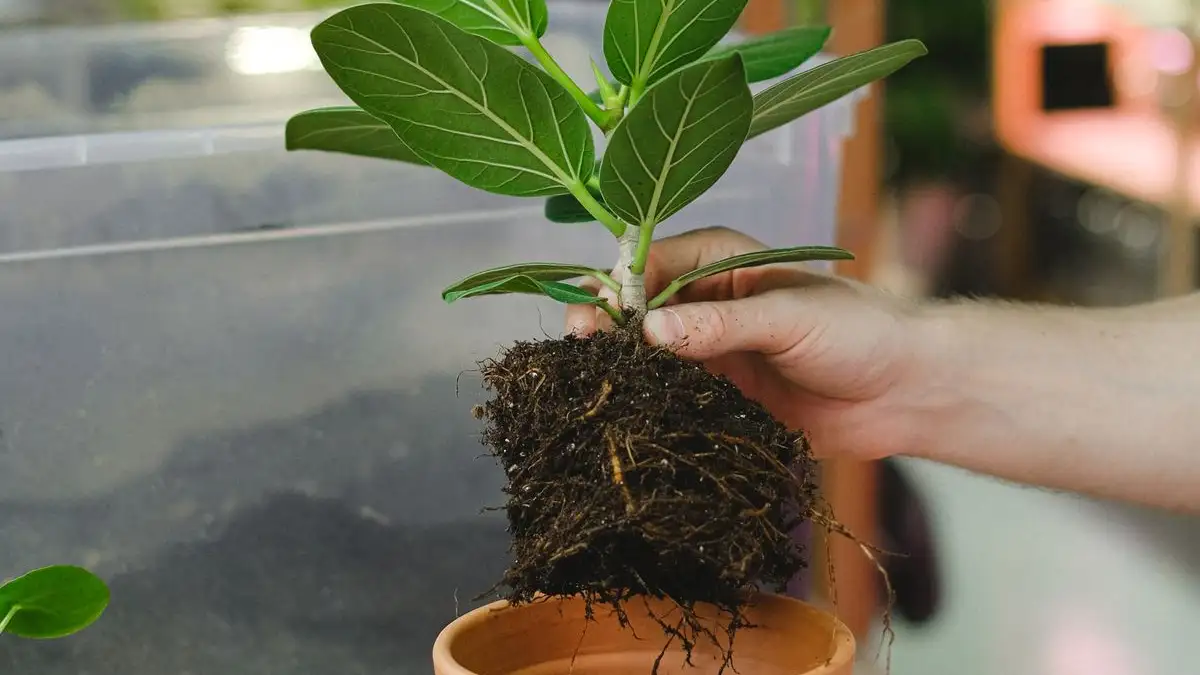
Here is where I usually end up making that call. You have carried the pot to the sink, and the first thing you notice is how light it is — lighter than it should be for something that still looks planted. The bark on top is dark and clumped. You press a finger into it and it gives like a wet sponge instead of clicking like dry chips. You lift one piece out and roll it between your thumb and finger, and it smears rather than cracks. There is a smell, too — sour, like a dishrag left in the sink overnight. If the plant came in a clear inner pot, you can see the roots pressed against the wall: most of them silver-green and firm, two or three dark and shriveled where the media has been sitting wet against them for months. That pot in your hands is the whole decision. Not the month, not the date you bought it.
What collapsed bark is actually doing down there
Bark-based orchid mix is not inert. It is wood, and wood rots. Somewhere between the first year and the second, the chips start breaking down at the edges, going soft, and losing the air gaps that made them useful in the first place. A fresh, chunky mix is mostly air with water passing through it. A collapsed mix is mostly water held against the roots.
Roots need both. The velamen — that silvery outer layer you can see — is a sponge, but a sponge with air in it. When the media around it stays saturated, the root loses the oxygen it needs, the outer layer goes translucent and then dark, and the core turns to mush. Hollow, brown, or stringy roots are dead. They will not come back, and they will not support a flower spike.
So when you look at a plant that has been in the same bark for two years, you are not looking at a plant that is due for repotting on a schedule. You are looking at a plant running a shrinking root system inside media that is actively working against it. Nothing about that favors a spike.
A spike is a withdrawal, not a gift
Think of the roots as the account and the spike as the withdrawal. A Phalaenopsis pushes a spike when it has enough stored carbohydrate and enough healthy root surface to supply the water and minerals that flowers demand. It does not check the calendar. It checks whether it can afford the expense.
That is why the timing question and the root question are really one question. Repot a plant that has been struggling in collapsed bark, and do it at the right moment, and it re-establishes into fresh, airy media and then drives a spike from a full account. Repot at the wrong moment and you knock the plant off its feet mid-withdrawal. Now it has to choose between finishing the spike and surviving, and it almost always chooses surviving. The spike goes first, because a spike is disposable and roots are not.
The two windows that actually work
The safest window is right after the last flower drops and before the plant starts anything new. It is between efforts; there is no spike to abandon. Trim the old spike above the first or second node if you want, ease the plant out, and let it settle into fresh mix while it is doing nothing else.
The second window is just as good and easier to spot: new root tips. Look at the rim of the pot and just under the surface of the media. When you see pale green or purple-tinged tips starting to push out — the growing points, not the mature silvery roots — the plant is in active root growth, which is exactly the state you want it in for a repot. It knits into the new media within weeks. This window shows up on its own schedule, often in late spring or early summer indoors, but the plant decides, not you.
Two windows, and both are defined by root activity. Notice that neither one is whenever you bought it, and neither one is every two years on the dot.
Repotting mid-spike, and what you lose
If the plant is carrying buds, or a spike is elongating and the first buds are swelling, repotting is a roll of the dice with bad odds. The plant is putting everything into that spike, and disturbing its roots removes its ability to keep supplying it. Buds are the first thing to go — they yellow, shrivel, and drop off the spike one by one. Sometimes the whole spike turns yellow from the base up. Sometimes nothing happens for a week and then the buds blast anyway.
If the plant is in genuine trouble — rot climbing the stem, roots collapsing in soured media — you do what you have to do, accept the lost spike, and repot. A live plant without a spike beats a flowering plant that dies three weeks later. But that is a rescue, not a schedule.
What you cut, and what you leave
When you do repot, the roots tell you what to do next. Healthy roots are firm and silver-green when dry, and they plump and turn green after watering. Leave those alone.
Mushy, hollow, or dark brown roots are dead and rotting tissue, and they come off. Use shears cleaned with rubbing alcohol, cut back to firm white or green tissue, and put nothing on the cut ends — they need air, not dressing. Do not be sentimental about the count. A plant with six healthy roots in fresh bark will outperform one with twenty roots, half of them rotting in a soaked clump.
One thing I check every single time: where the stem meets the media. The crown must sit at or just above the surface, never buried. Burying it is the fastest way to turn a routine repot into a stem rot problem.
Moss changes the math
If the plant came in sphagnum moss and you move it into bark, understand that you have changed the watering schedule, not just the potting material. Moss holds water far longer than bark does. A plant in a tightly packed moss plug can sit wet for days longer than the same plant in chunky bark, which means the margin for overwatering is much smaller and the roots sit much closer to the line between damp and drowning.
The reverse is also true. Moving from bark to moss means the plant will stay wet longer than your old habits assume, and the first sign of trouble usually shows up as a root going from green to dark in the middle of the pot, where you cannot see it. Whatever the media, water by what the roots are doing, not by a weekly habit.
The pot should be snug
Orchid roots like contact. They like to be pressed against something, and they like to dry between waterings. A pot that just fits the root mass — roughly the same size, or one size up at most — lets the media around the roots cycle from wet to dry in a reasonable time.
An oversized pot holds a large volume of wet media the roots cannot reach or dry out. The center stays wet, the edges stay wet, and the roots in the middle start to fail while the top inch looks perfectly dry. If the plant has lost a lot of roots, go smaller, not bigger. A snug pot is one of the few things you can do at repotting time that keeps paying off for the next two years.
What I do on repotting day
Wait for one of the two windows. Water the plant the day before if the roots are dry and silvery; roots are less brittle when they are plump, and they tease apart more easily. Ease the plant out of the pot by squeezing the sides if it is flexible, or running a knife around the inside if it is not. Work the old media out of the roots with your fingers and a slow stream of room-temperature water — not a hard blast. Cut what is dead. Choose the snug pot. Settle the plant so the crown sits just above the media line. If you had to make cuts, skip watering for a few days and let the wounds callous. Then put it back in the same light it was in, and leave it alone.
And then you wait. Nothing will happen for a while, and that is the point.
The part that depends on the plant
I cannot give you a date. A Phalaenopsis repotted into fresh bark the week after its last flower dropped will usually settle in and start a new spike within a few months, once its own root flush tells it to. A plant repotted in the middle of a bud break will lose those buds and may sit out an entire bloom season before it bothers again. Same plant, same pot, same bark, same calendar month — different outcome, because the plant was at a different point in its own cycle.
That is the honest version of the advice. You are not scheduling a chore. You are watching for a signal from the roots, and then acting inside it.
