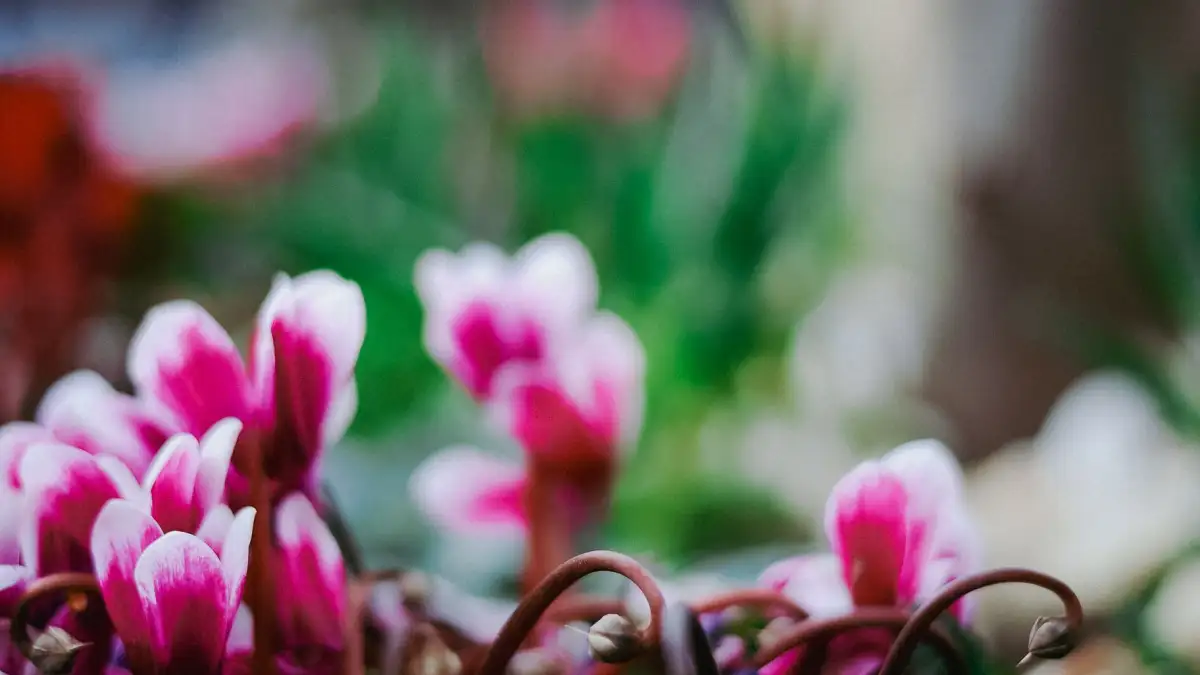
A dome over a plant in bud solves one of the four common causes of bud blast, and only one: dry air that swings hard between day and night. It will not stop a cold draft, will not pull ethylene away from a bowl of ripening fruit, and will not warm a bud sitting in a window that sheds ten or fifteen degrees after sunset. What it will do is replace moving air with still, saturated air, which is exactly what botrytis wants in order to turn a firm green bud into a water-soaked spot and then a brown smear. The dome belongs on a plant in one narrow situation, and it comes off the moment the first bud cracks open. Used as a reflex on any plant that has dropped a bud, it usually converts a partial loss into a complete one.
I worked that out the slow way, on a kitchen windowsill, with a phalaenopsis that had four fat buds on one spike and no future. The sill was the brightest spot in the house that wasn't two feet from a register, so the plant lived there through a January, and the furnace ran most of the night. The hygrometer on the shelf above the coffee can read in the twenties. I did the thing that seems obvious when you're standing there looking at a dry room and a plant with its whole season riding on four buds: I pulled a clear produce bag out of the drawer, dropped it over the plant like a tent, punched two pencil holes near the top, and told myself I'd built a little greenhouse.
Three mornings later the bag was fogged and the buds looked tight, and I decided it was working. On the fifth morning the biggest bud had a pale, translucent patch on one petal, the kind of mark a drop of water leaves on a paper towel. I wiped it with my thumb and called it condensation. By the seventh morning the patch had gone tan and soft, and the bud beside it had started to yellow at the joint where it meets the stem.
That's the whole lesson, and it took me two ruined spikes to see it. The yellowing bud and the spotted bud are two different problems, and covering the plant had swapped one for the other. Bud blast became petal rot.
What the plant is actually doing when buds blast
Bud blast isn't a disease. It's a plant deciding, under stress, that it can't carry the reproductive tissue it started. A bud that has grown to full size is an expensive thing to keep, and when conditions around it change faster than the plant can adjust, it aborts. The color goes first at the pedicel, the short stalk connecting each bud to the spike, and then the bud itself goes limp, shrivels, and drops — usually within a few days of whatever upset it.
The part that matters for diagnosis is that the bud on the floor tells you almost nothing about which stressor did it. A bud that dropped from a cold draft and a bud that dropped from dry air look about the same dried up on the windowsill. You can't tell them apart after the fact. You have to reconstruct the last three days: what moved, what opened, what got turned on, what came in from the grocery store.
Humidity is one input, not the cause
When people find a dropped bud and reach for a plastic bag, they're treating humidity as the cause of bud blast. It isn't. It's one of four inputs that regularly go out of range indoors in winter, and it's rarely the one that did the damage.
- A cold draft. Exterior doors, a leaky window sash, a gap under the balcony door. Cold air moving across a bud chills the tissue directly, and a bud has very little mass to buffer that.
- Ethylene. Ripening fruit is the household source. A bowl of bananas or apples within a few feet of a spike will do it. Gas from a furnace or a badly vented appliance is another, and that one usually shows up as buds blasting on every plant in the room at once rather than on one.
- Temperature swings. The radiator that goes cold at midnight, the window that drops ten degrees after sunset, the register that blows warm air across the spike for twenty minutes an hour.
- Dry air. Low indoor humidity held over days, or a sharp drop in it. The heat coming on for the first time in November is the classic version.
Any one of those will blast buds on its own. When they stack up, you lose the spike. Raising humidity fixes the fourth one and leaves the other three running, which is why a dome sometimes seems to help and sometimes seems to do nothing at all.
The other thing I'd say to anyone staring at a hygrometer the way I was: the reading in the middle of the room is not the reading at the windowsill, and a cheap meter drifts. I've stopped trying to hit a humidity target and started trying to stop the swings. That's a different job, and it's the one the plant actually cares about.
What a dome can and cannot do
A dome works by trapping the water the plant transpires. In a dry room, a bagged plant sits in a pocket of air that stays much more humid than the room, and that does buffer a bud against a dry spell. If the only problem in your house is that the air is bone dry and steady, a dome helps. That is genuinely the whole of what it does.
It cannot do the other three jobs:
It doesn't block a draft in any meaningful way. The plastic gets cold from the outside, and the inside of the bag becomes a wet surface hovering an inch from the buds. A plant sitting in a cold doorway will still blast under a dome, and now it's blast plus condensation dripping onto the spike.
It doesn't remove ethylene. Ethylene is a gas. A sealed bag holds it in, so if the source is in the same room, a dome can concentrate the problem around the plant instead of diluting it.
It doesn't warm anything. A dome has no heat in it. It slows a temperature change slightly, and that's all. If the window is dropping twelve degrees overnight, the buds inside the bag are dropping with it.
The catch: it builds a botrytis chamber
Botrytis blight needs still air and a film of moisture on tissue, and a sealed dome over a transpiring plant is a machine for producing both. It shows up first as small water-soaked spots on a petal or the side of a bud — translucent, then tan, then fuzzy and gray at the edges once it's had another day. Once a petal is spotted it isn't coming back. The useful move is to get the affected flower and any fallen tissue off the plant, get the dome off or opened wide, and get some air moving in the room. That's a culture fix, not a spray.
If you are going to dome a plant anyway
There's one situation where I still do it: a budded plant in a room where I've already fixed the location, already moved the fruit, and the air is still so dry that the spike is losing buds faster than I can work out why. Then, and only then:
- Open it every day. Lift the bag for an hour, let the inside dry off, put it back. A dome that never gets opened is a rot chamber.
- Never let plastic touch the buds. Condensation runs down the inside of the bag, and if the spike is pressed against the film, that water lands on a petal.
- Keep it out of direct sun. A sealed bag in a south window heats up fast in the middle of the day, and that's a temperature swing you built yourself.
- Take it off at the first crack of color. Open flowers in sealed, humid air go limp and brown within a couple of days, faster than the buds ever would have.
- Don't bag a plant that's already showing spots. You're past the point where humidity is the problem.
Phalaenopsis wants steadiness, not a tent
Of the flowering houseplants people bring home in bud, phalaenopsis is the one where the dome is most often unnecessary and most often harmful. What a phalaenopsis spike wants through the bud stage is for nothing to change. One spot, away from heating vents, away from exterior doors, away from the fruit bowl, and left there. Not moved to the dining table when company comes. Not turned every day to even out the light. Not pushed closer to the glass in the afternoon because the light looks nice.
I have a spot on a bookshelf about six feet from a north window where spikes go once the buds are sizing up, and the plants stay there until the last flower drops. That single habit has done more for my reblooming than anything I've done with a bag or a humidifier. It also means the plant almost never needs a dome, because ordinary winter humidity in a house holds phalaenopsis buds perfectly well as long as the temperature and the air around them are stable.
If you take nothing else from this: the dome is a tool for dry air in an otherwise steady situation. It is not a general-purpose bud protector, and it can't stand in for the location decision.
The bud that has already yellowed
One more thing, because it's the part that stings. A bud that has gone yellow at the joint is finished. No humidity, no warmth, no moving of the plant, no intervention brings it back. I spent a winter proving that to myself anyway.
What you're doing when you correct conditions after a blast is protecting the buds that are still green and setting up the next spike. The plant isn't spending the following months recovering from a loss it has already taken.
So the order is: find what changed, fix the thing that changed, and check that you haven't introduced a second problem while you were fixing the first. Then leave the plant alone long enough to see whether the remaining buds hold.
That's the part I keep relearning. The urge to do something is strongest right when doing something is most likely to cost you the bloom.