Christmas cactus bud drop is rarely a disease and almost never the fault of one single mistake. It is the end of a chain — a move, a draft, a shift in light, a swing in moisture, usually two or three of those stacked inside the same two weeks — and the useful response is to stop cycling through random fixes and reconstruct the recent past in order. Find the chain, break it, and leave the plant alone.
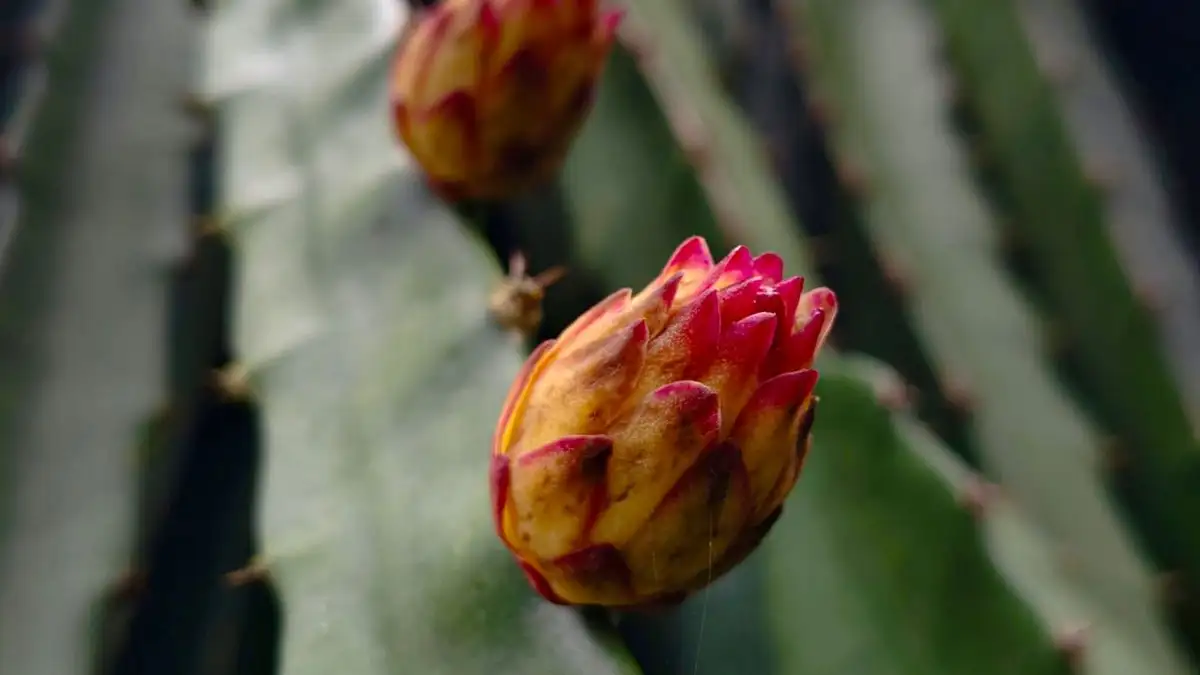
Stand in front of the plant with me for a minute. Late November, a windowsill, buds the size of small pink grains of rice. One of them is on the saucer. Pick it up, turn it over, look at the base. Clean, pale green, no brown mushy end, no shriveled papery skin. That clean separation is most of the diagnosis. The plant grew a corky abscission layer at the base of that bud and cut it loose on purpose. Nothing bit it. Nothing rotted it. Something in its surroundings told it that holding that bud was a bad bet.
Which means the question is never what is wrong with the plant. The question is what changed around it.
Bud drop runs on a delay, and the delay fools everybody
The bud on the floor this morning was probably doomed several days ago. That lag is why so many people blame the wrong thing. You water on Tuesday, you find a bud on the saucer Wednesday, and you conclude the plant hates water. What actually happened is that a draft from a door that opened on Friday night already made the decision, and the bud only just finished carrying it out.
As a working window, I look back ten days to two weeks. Anything the plant experienced in that span is a candidate. Anything older is usually irrelevant unless it was severe enough to damage roots — and if roots were damaged, the symptoms would be broader than a few dropped buds. You would see limp segments, yellowing, a plant that looks tired rather than a plant that looks otherwise fine with a litter of buds underneath it.
That distinction saves time. A Christmas cactus that is dropping buds while the foliage stays firm and green is telling you the problem is environmental and recent. A Christmas cactus that is dropping buds while the segments go soft and dull is telling you something else, and you should read the water section below with more suspicion.
The four changes that account for almost all of it
Relocation
Moving the plant is the single most common trigger, and it is also the one people dismiss because the move seemed trivial. Carrying it from the bedroom to the living room so guests can see it. Turning it a half turn every few days for even growth. Sliding it off the sill to water it and setting it back somewhere slightly different. Shifting it away from a window because you were worried about cold glass.
From the plant's perspective, none of those are trivial. A bud is a small, unhardened package of tissue with a fixed water budget, and it developed under one specific combination of light angle, air movement, and temperature. Change the combination and the plant recalculates whether it can finish the job. Sometimes it decides no.
Air: drafts, vents, and dry heat
Here is the one I check second, because it is invisible. Where does air move in that room? A door that opens to a hallway. A window sash that leaks on a windy night. A forced-air register three feet away. A ceiling fan on low that nobody thinks about. A radiator or baseboard heater under the sill that runs hardest at night.
Buds that are being chilled or baked dry will usually show it before they fall — a slight dulling of color, a tightening, a papery look at the tip. If the bud on the floor feels crisp and light, like a dried currant, that is the chain you are on: air and humidity. If it feels soft, translucent, or yellowed at the base, that is the water chain.
Low indoor humidity in a heated house makes all of this worse, and it compounds with drafts rather than acting separately. A plant near a vent in January is dealing with moving air and dry air at the same time.
Water in both directions
The frustrating part about moisture is that both mistakes produce the same visible result. Let the mix go bone dry during bud development and the plant will abort buds it cannot keep hydrated. Keep the mix saturated and the roots sit in an airless medium, which shuts down water uptake anyway — the plant ends up dropping buds from what looks like drought while sitting in a wet pot.
So do not water by calendar. Check by weight. Lift the pot. A six-inch pot of moist mix has a heft you learn in about a week. If it feels light, water thoroughly until it runs out the drainage holes, then empty the saucer. If it still feels heavy, wait. A wooden skewer pushed down to the middle of the pot and pulled out tells you the same thing with less guesswork.
What matters during bud development is consistency, not a number of days. The swing is the problem.
Light, including light you thought was an improvement
Most people understand that a Christmas cactus needs short days and long nights to set buds in the first place. What they miss is that once buds are visible, sudden changes in light intensity go the other way and can cost you the crop. Moving the plant to a brighter window "to help the buds along" is a change, not a gift.
So is the reverse: a curtain that gets closed in December, a plant moved back from a sunny spot because the buds looked like they were getting too warm, a new grow light switched on after months without one. Any of those can be the last link in the chain.
And it is not only light. Christmas cacti are sensitive to ethylene, which is why a bowl of ripening fruit — apples and bananas especially — sitting next to a budding plant is worth moving. A gas appliance nearby, or a furnace with a leak, does the same thing at a lower level. You will not smell it. You will just find buds on the floor.
One warning about the cool nights
Here is the part that trips up experienced growers, not beginners.
Cool nights — roughly the low fifties to low sixties — help trigger bud formation. That is real. But that is a requirement of the initiation stage, before you can see anything. Once buds are actually visible on the tips, chasing cold nights is the opposite of helpful. Now the plant wants even temperatures, somewhere in the mid sixties to mid seventies, with no big day-to-night swing. A window that bakes in afternoon sun and then drops thirty degrees after dark is a bud-dropping machine.
If you have been leaving the plant near a chilly window because you read that Christmas cacti like cool nights, that advice was for a stage that is already over. Move it once, gently, to a stable spot — and then stop moving it.
Reading the chain instead of guessing at it
You rarely find one cause. What you usually find is a stack. The plant got carried to the dining table for a party, which put it near a register, and it also missed a watering because nobody remembered, and the room was dry. That is three links. Fixing only one of them will not hold the rest of the buds.
So write the timeline out. Not mentally — actually write it. Days across the top, and under each day, what the plant experienced: moved, watered, windows opened, heat came on, curtains drawn, fruit bowl arrived. You will almost always see a cluster. That cluster is your answer, and it usually points at something you had already dismissed as too small to matter.
Holding buds once they are set
Once buds appear, the care plan gets deliberately boring.
Pick one spot with bright, indirect light and stable temperature, and leave the plant there until the flowers open and fade. Water when the top inch or so of mix has dried, not on a schedule, and never let the pot sit in standing water. Stop fertilizing — a budding plant is not building new growth, and pushing it with nitrogen encourages it to abandon flowers in favor of leaves. Do not repot. Do not prune. Do not mist the buds directly; wet buds in cool, still air is a rot invitation, not a humidity solution.
If the room is genuinely dry, raise humidity around the plant rather than on it — a tray of pebbles with water beneath the pot, or grouping it with other plants. Keep the water level below the pebbles so the pot is never sitting in it.
If every bud has already dropped
First, expect nothing for the rest of this cycle. A Christmas cactus that has stripped itself usually will not reflower in the same season, and that is normal. Do not respond by feeding it heavily or repotting it as a rescue; both add another link to the chain.
Second, hold the conditions steady for two to three weeks and see whether it sets a second round. These plants can rebloom if the nights are still long enough and nothing else is tugging at them. Keep it cool and dark for twelve to fourteen hours overnight, bright and stable during the day, and water evenly. Some plants will push a smaller second flush in January. Some will not, and the plant is not damaged either way.
What you have bought yourself, in that case, is information. You know which changes cost you the buds. Next November you will move the plant into position in early fall, before the buds are visible, and then leave it there through the whole show.
